Algorithmic Trading 101: From Python to Profit
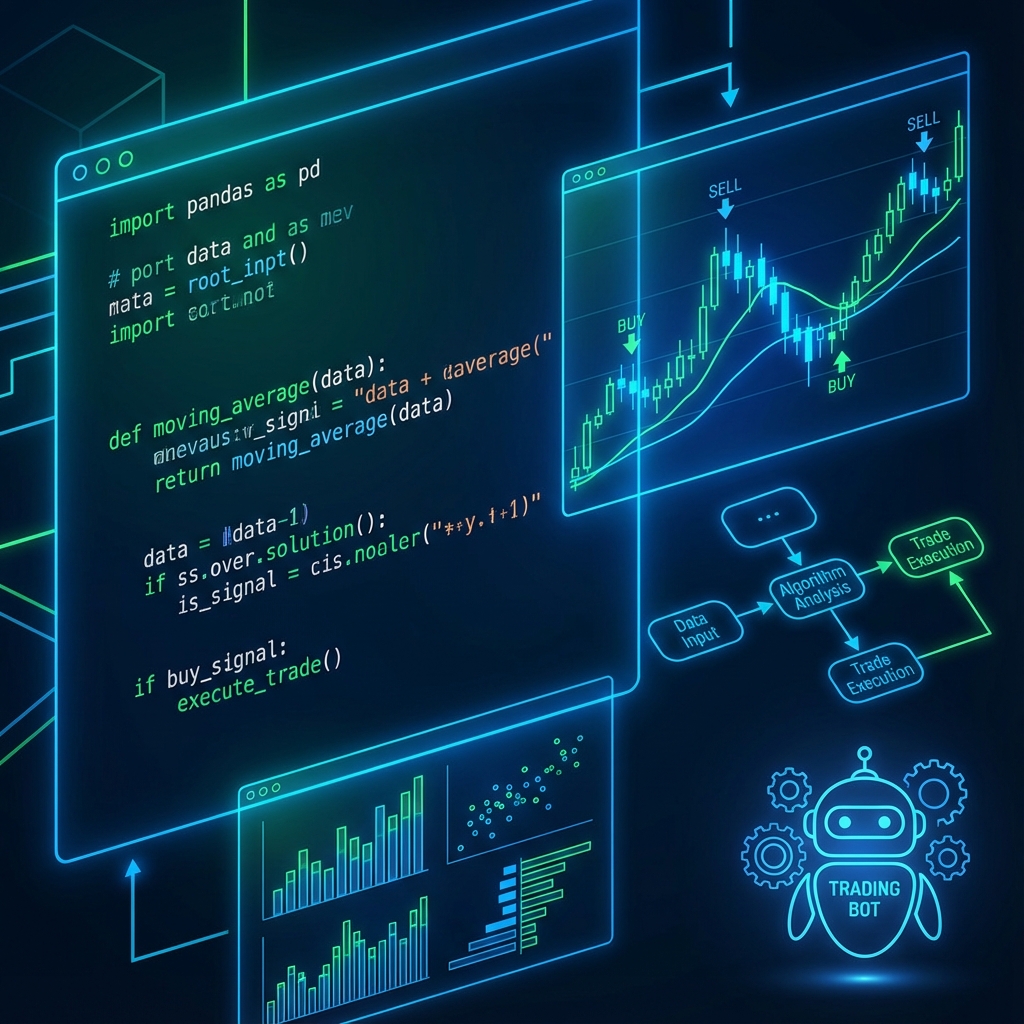
Algorithmic Trading 101: From Python to Profit
The stereotypical trader is a man shouting into a telephone on Wall Street. The actual modern trader is a quiet server in a data center in New Jersey, executing thousands of orders per second based on Python code.
Algorithmic Trading (Algo Trading) is the use of computer programs to execute trades based on pre-defined criteria. It accounts for 60-75% of all trading volume in the US equity markets.
This guide will walk you through the pipeline of building a retail trading bot.
1. The Algo Trading Pipeline
Building a bot isn't just writing an if/else statement. It involves a robust pipeline:
- Data Acquisition: Getting historical and live data (price, volume, sentiment).
- Strategy Design: Defining the entry/exit logic.
- Backtesting: Simulating the strategy on past data to verify performance.
- Paper Trading: Running live with fake money.
- Execution (Live): Connecting to an exchange API to trade real capital.
2. The Toolset: Python
Python is the lingua franca of algo trading due to its rich ecosystem of data science libraries.
Essential Libraries
- Pandas: For handling time-series data (OHLCV).
- NumPy: For high-speed mathematical calculations.
- TA-Lib / Pandas-TA: For calculating indicators (RSI, MACD, Bollinger Bands) instantly.
- Backtrader / Lean / Zipline: Frameworks for backtesting.
- CCXT: A massive library for connecting to over 100+ Crypto exchanges.
- Interactive Brokers API (ib_insync): For stock/forex execution.
3. Basic Strategy Example: The Moving Average Crossover
Let's conceptualize a simple "Golden Cross" bot code structure.
import pandas as pd
import pandas_ta as ta

# 1. Load Data
df = pd.read_csv('BTC-USD.csv')

# 2. Calculate Indicators
df['SMA_50'] = ta.sma(df['close'], length=50)
df['SMA_200'] = ta.sma(df['close'], length=200)

# 3. Define Logic
def generate_signals(row):
    if row['SMA_50'] > row['SMA_200']:
        return "BUY"
    elif row['SMA_50'] < row['SMA_200']:
        return "SELL"
    else:
        return "HOLD"

df['Signal'] = df.apply(generate_signals, axis=1)
In the real world, you would need to handle "state" (do I already own the asset?) and transaction fees.
4. The Importance of Backtesting
Backtesting is the process of asking "How would this strategy have performed in 2020?"
Key Metrics to Optimize
- Sharpe Ratio: Return vs. Risk. (Target > 1.5).
- Max Drawdown (MDD): The biggest peak-to-valley drop. If your bot makes 100% profit but had a 50% drawdown in the middle, you probably would have turned it off in panic.
- Win Rate vs. Risk/Reward: You can have a 40% win rate and still be profitable if your wins are 3x bigger than your losses.
Overfitting: The Cardinal Sin
Overfitting (or curve-fitting) happens when you tweak parameters so perfectly that they mesh with historical noise.
- Example: "Buy when RSI is 31.5 and it's a Tuesday."
- Result: The strategy looks like a gold mine in backtests but fails instantly in live markets because the noise patterns changed.
- Solution: Use "Out-of-Sample" testing. Train on 2018-2021 data, test on 2022 data.
5. Infrastructure and Risk Management
Your code is running 24/7. Your laptop cannot go to sleep.
- VPS (Virtual Private Server): Host your bot on AWS (EC2), Google Cloud, or DigitalOcean so it never disconnects.
- Rate Limits: Exchanges will ban you if you spam API requests. Implement
time.sleep(). - The "Kill Switch": Hard-code a safety mechanism. "If daily loss > 5%, close all positions and shut down." This prevents a buggy loop from draining your account in seconds (a "flash crash").
6. Types of Strategies
- Trend Following: Riding momentum (Moving Averages, Breakouts).
- Mean Reversion: Betting that price returns to average (RSI, Bollinger Bands).
- Arbitrage: Buying BTC on Exchange A for $50k and selling on Exchange B for $50.1k. (Extremely competitive).
- Market Making: Placing limit buy and sell orders to capture the spread.
- Sentiment Analysis: Scraping Twitter/X or Reddit for keywords to predict moves.
Conclusion
Algorithmic trading is the ultimate discipline. It forces you to define your rules precisely. It removes the fear of pulling the trigger and the greed of holding too long. However, it replaces trading risk with technical risk. The code you write is now your edge—and your liability.
Start small. Backtest ruthlessly. And never deploy code you don't fully understand.
Disclaimer: Algorithmic trading involves significant risk of loss.