Dan Gurney's 1967 Spa Victory: When America Conquered Formula 1
The checkered flag waves. The blue and white Eagle crosses the line, its Weslake V12 engine screaming in triumph. Dan Gurney, the tall Californian with the easy smile, has just done what no American had accomplished in forty-six years—and what no driver has done before or since. He has won a Formula 1 World Championship Grand Prix in a car he designed and built himself.
It is June 18, 1967. The setting is Spa-Francorchamps, the fearsome 14.1-kilometer circuit carved through the Ardennes forests of Belgium. And on this day, Daniel Sexton Gurney writes his name into motorsport immortality.
This is the complete story of that historic victory.
Table of Contents
- The Climactic Moment
- The Man: Dan Gurney's Journey
- The Machine: The Eagle T1G
- The Stage: Spa-Francorchamps 1967
- The Race: 28 Laps of Glory
- The Aftermath: A Legend is Born
- The Legacy: What It Meant
- References
The Climactic Moment
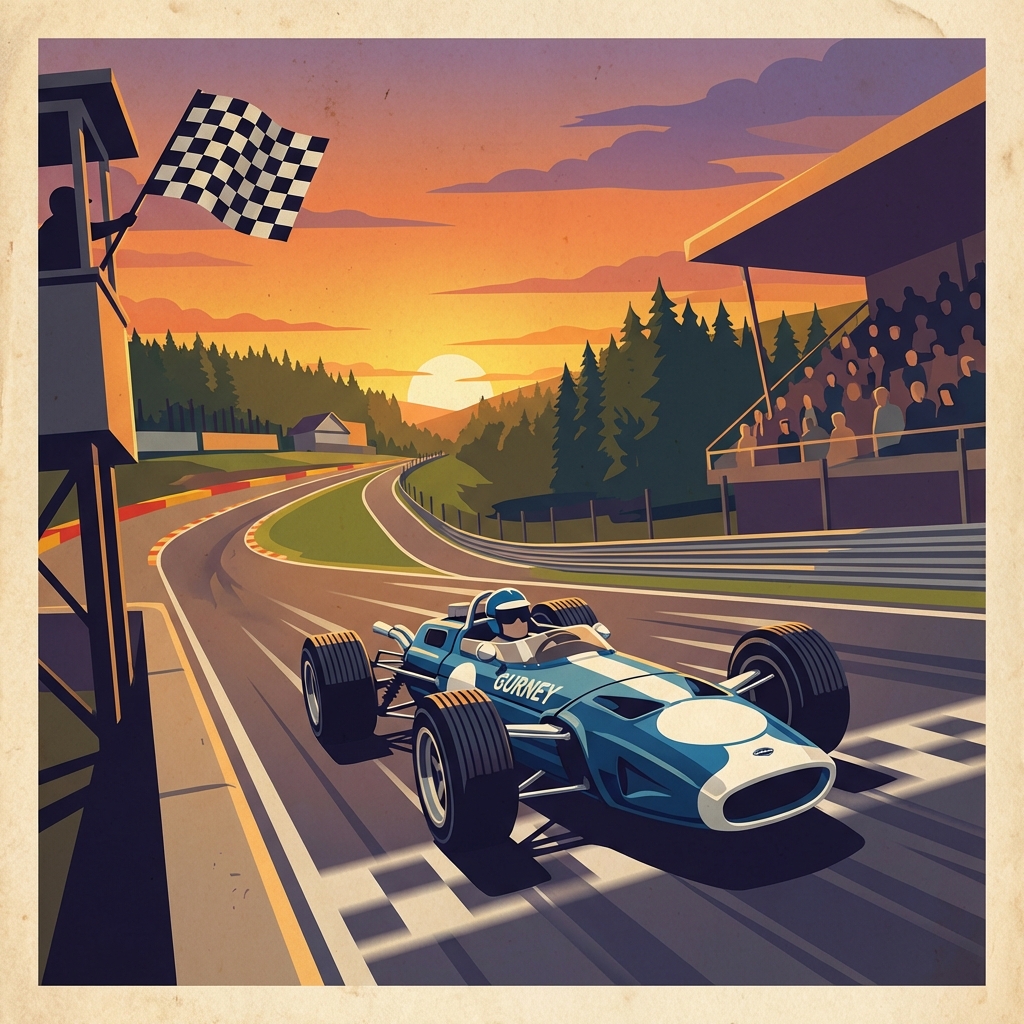
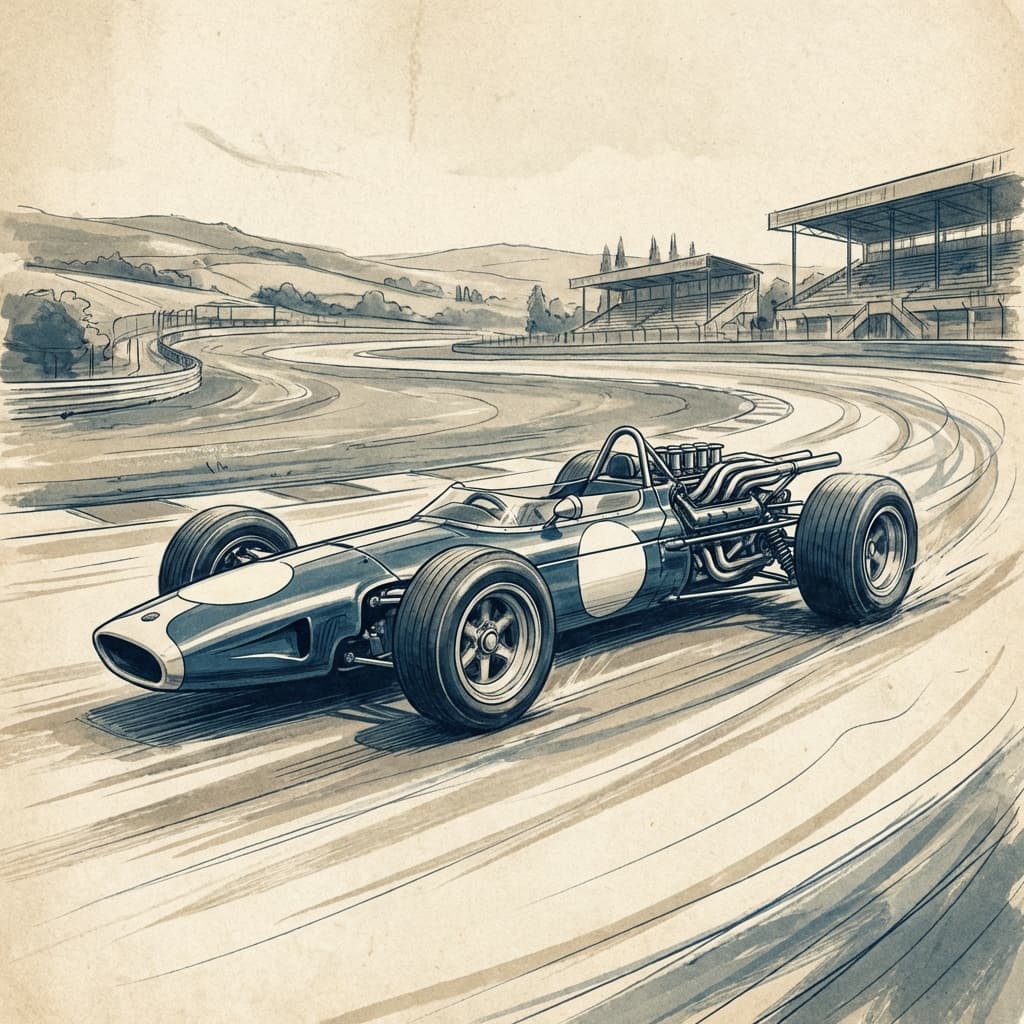
The final lap. The Eagle surges through Eau Rouge, that legendary uphill left-right combination that separates the brave from the merely fast. Gurney's hands are steady on the wheel, his focus absolute. Behind him, Jackie Stewart's BRM is more than a minute adrift. The race has been won—but Gurney pushes on, wringing every last ounce of speed from his creation.
As he crosses the finish line, the timing clocks stop at 1:40:49.4. One hour, forty minutes, and forty-nine seconds of perfection. The margin of victory: one minute and three seconds over Stewart.
The significance cannot be overstated. The last time an American-built car had won a Formula 1 Grand Prix was 1921. For forty-six years, American constructors had tried and failed. Now, finally, the drought was over.
But this victory was about more than national pride. Dan Gurney had not merely driven an American car to victory—he had built it. No driver before or since has won a Formula 1 World Championship Grand Prix in a car of their own construction.
It remains, to this day, a singular achievement.
The Man: Dan Gurney's Journey
California Dreaming
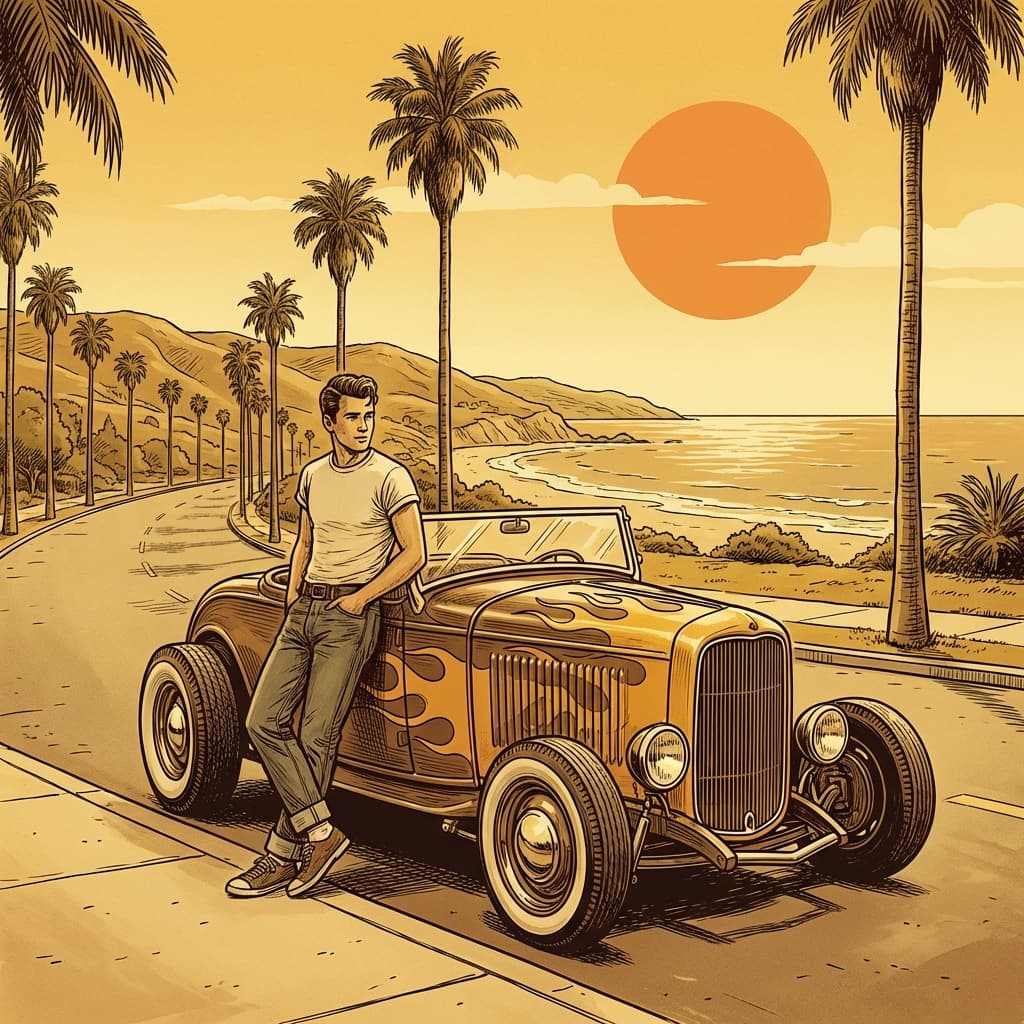
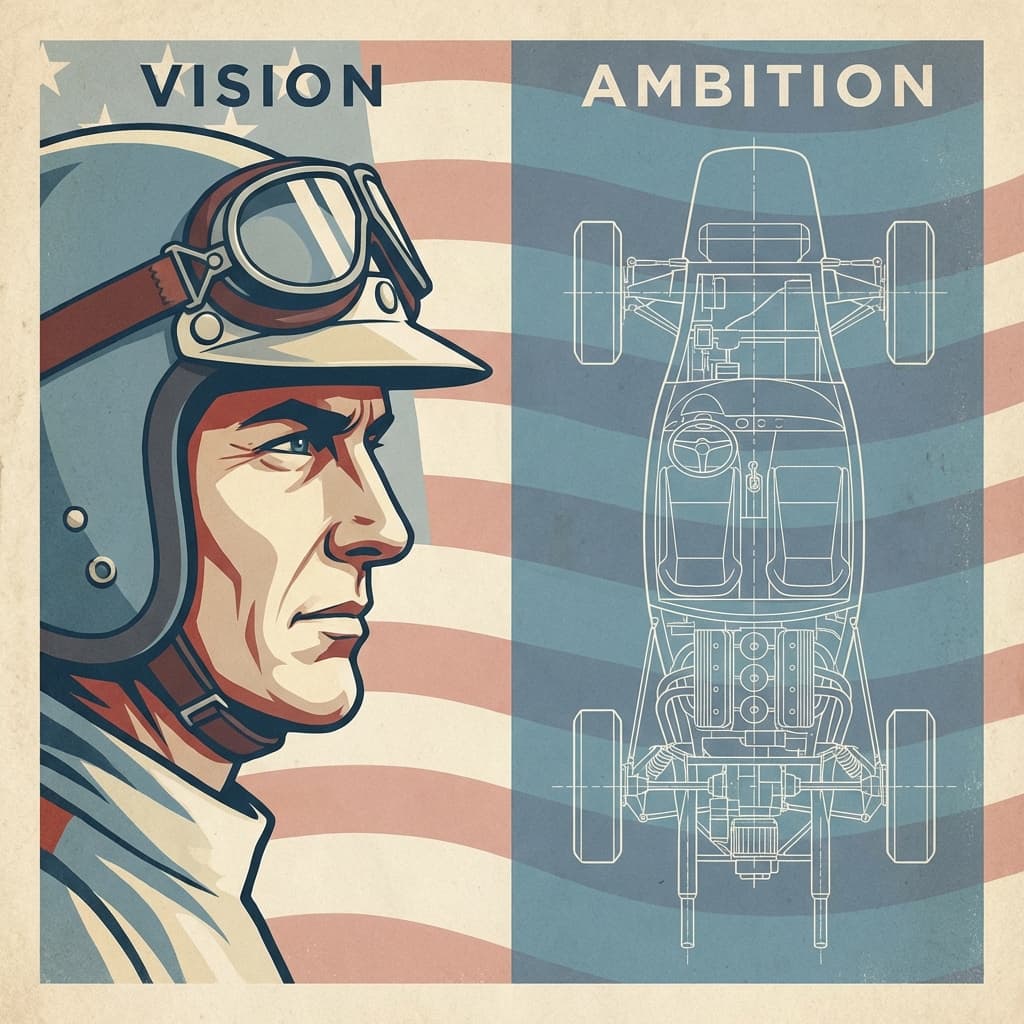
Daniel Sexton Gurney was born on April 13, 1931, in Port Jefferson, New York. His family moved to Riverside, California when he was a teenager, and it was there, surrounded by the burgeoning hot rod culture of post-war Southern California, that Gurney discovered his calling.
He was tall—six feet four inches—which would prove both a challenge and a distinction in the cramped cockpits of racing cars. But Gurney adapted, contorting his lanky frame to fit, and his height made him instantly recognizable on any grid.
The Ferrari Call
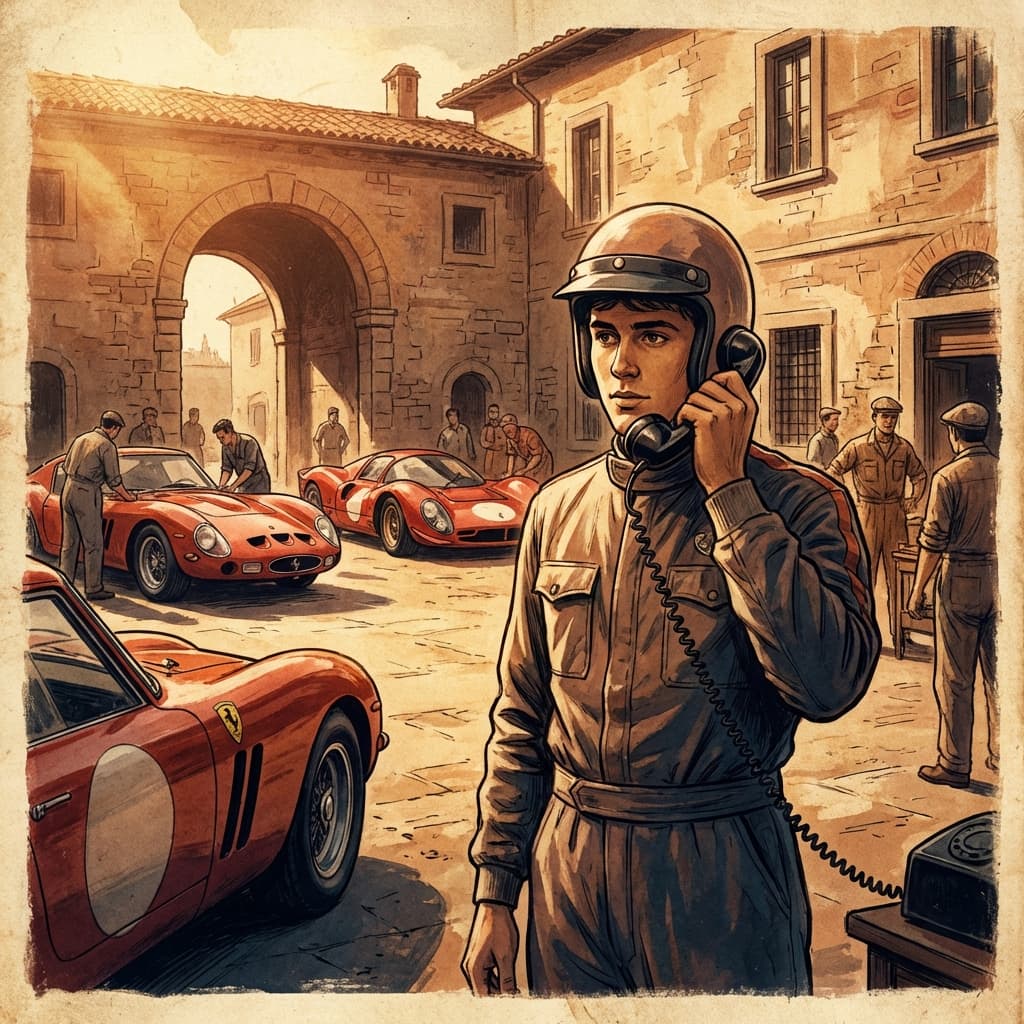
In 1958, Gurney made his professional debut at the 24 Hours of Le Mans, finishing fifth. His performance caught the attention of the motorsport world, and in 1959, he received the call every young driver dreamed of: Scuderia Ferrari wanted him.
Gurney's Formula 1 debut came at the French Grand Prix of 1959, driving for the legendary Italian team. Though his tenure with Ferrari was short, it established him as a driver of genuine Grand Prix caliber and taught him invaluable lessons about European racing culture.
Victory with Porsche
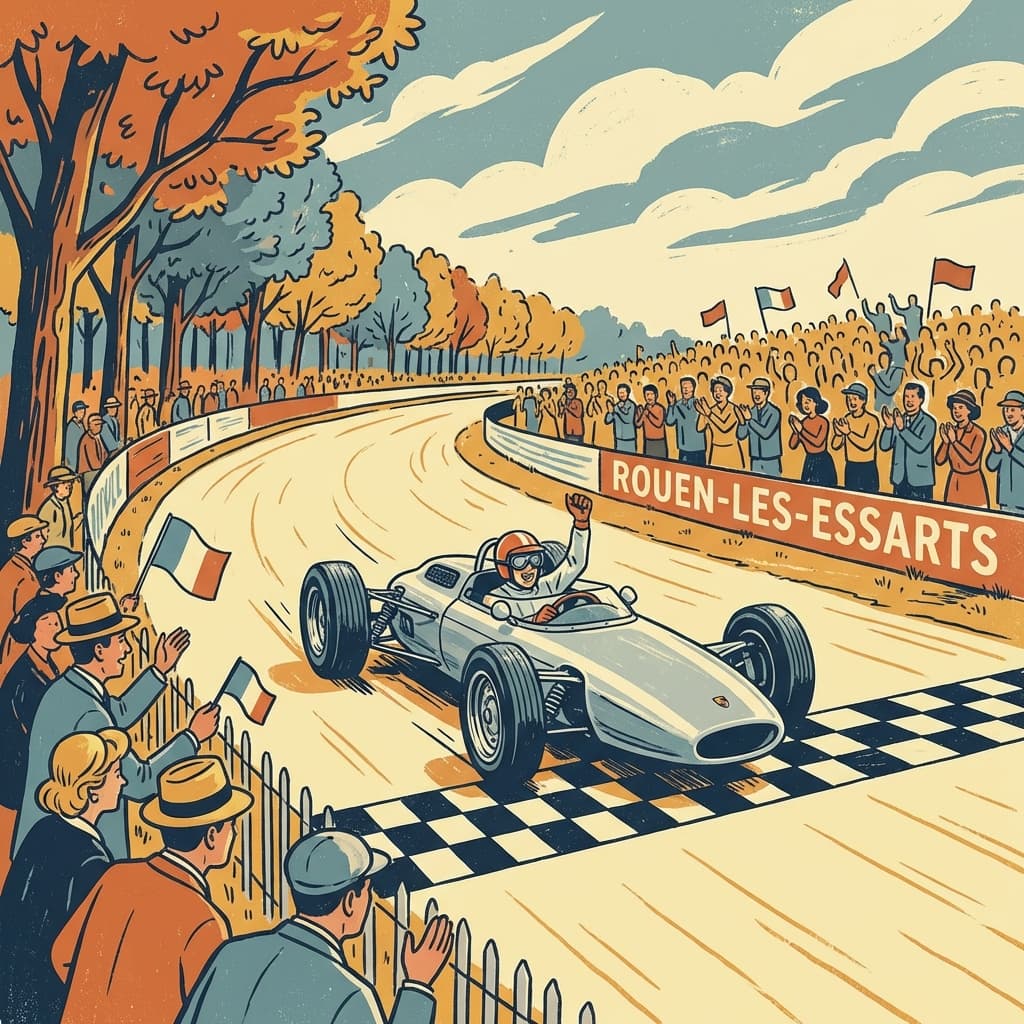
From Ferrari, Gurney moved to BRM, and then to Porsche. It was with the German manufacturer that he secured his first Formula 1 victory, winning the 1962 French Grand Prix at Rouen.
This made him the first American to win a World Championship Grand Prix since Jimmy Murphy in 1921. Two more victories followed with the Brabham team: the 1964 French Grand Prix and the 1964 Mexican Grand Prix. By the mid-1960s, Gurney had established himself as one of the finest drivers in the world.
The Dream Takes Shape
But Gurney wanted more. He didn't just want to drive winning cars—he wanted to build them. What set Gurney apart was his extraordinary versatility. By 1967, he had already won races in sports cars (1958), Formula 1 (1962), NASCAR (1963), and Indy cars (1967). Only Mario Andretti has matched this feat.
He was also an innovator. The 'Gurney flap'—a simple aerodynamic device on wing trailing edges—remains in use today in motorsport, aviation, and automotive applications. But in 1967, his great innovation was taking shape: All American Racers, and the Eagle.
The Machine: The Eagle T1G
Birth of All American Racers
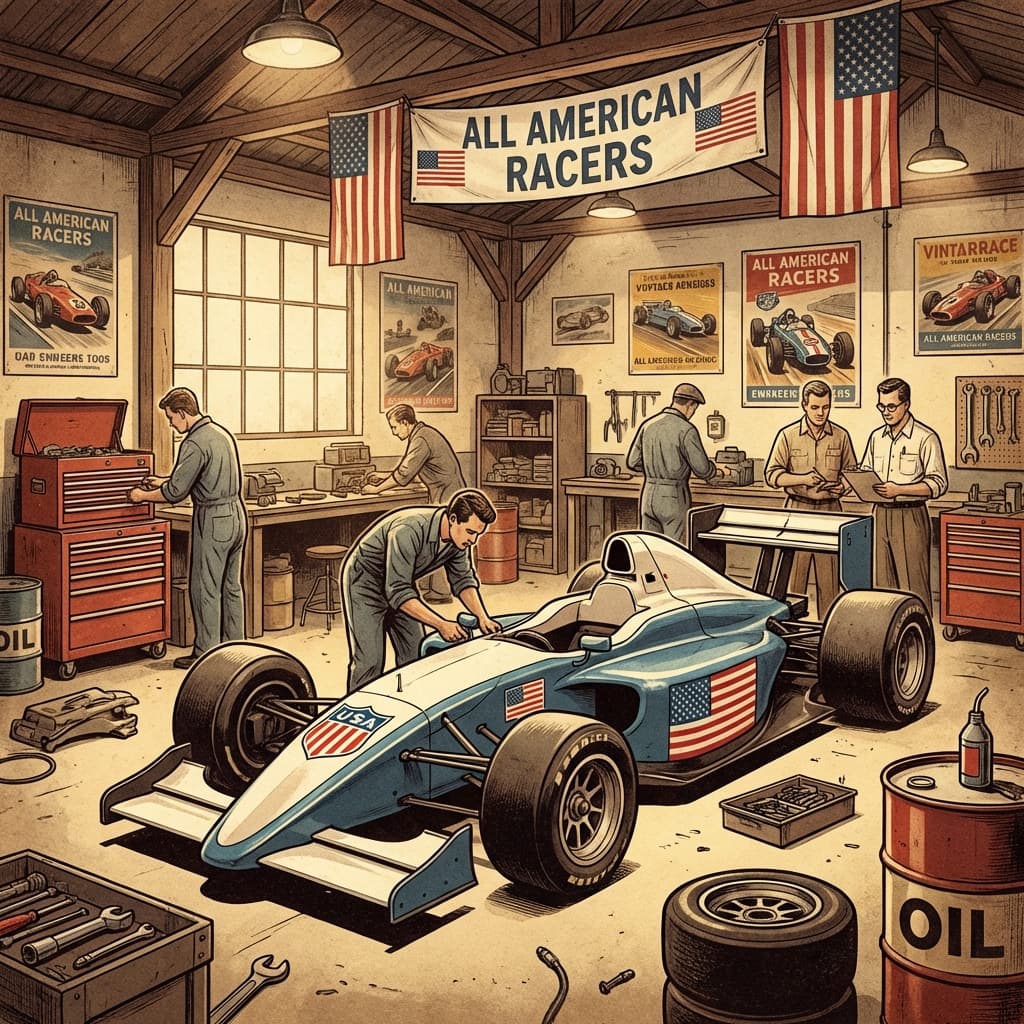
All American Racers (AAR) was founded in 1965 by Dan Gurney and Carroll Shelby, though Shelby's involvement was brief. The goal was audacious: to build American racing cars capable of competing at the highest levels of both Formula 1 and the Indianapolis 500.
Gurney recruited Len Terry, a respected British designer who had worked with Lotus, to create the cars. The result was the Eagle—a machine that combined American ambition with British engineering expertise.
A Beautiful Machine
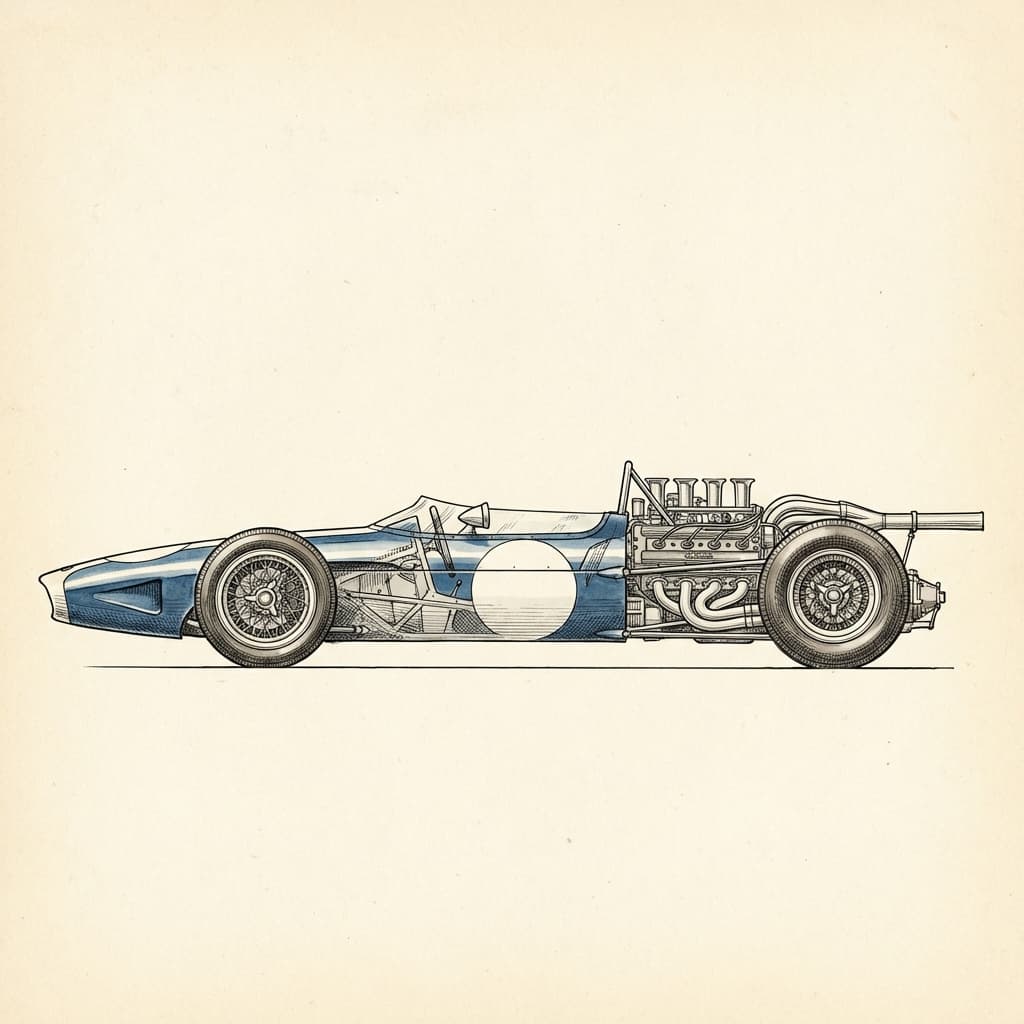
The Eagle T1G is widely regarded as one of the most aesthetically beautiful Formula 1 cars ever built. Its lines were sleek and purposeful, with a distinctive long nose that gave the car an aggressive, forward-thrusting appearance.
The original cars used a Climax four-cylinder engine, but Gurney wanted more power. In 1966, he began a collaboration with Harry Weslake, a legendary British engine builder who had worked with Jaguar, Aston Martin, and Ford.
The Weslake V12
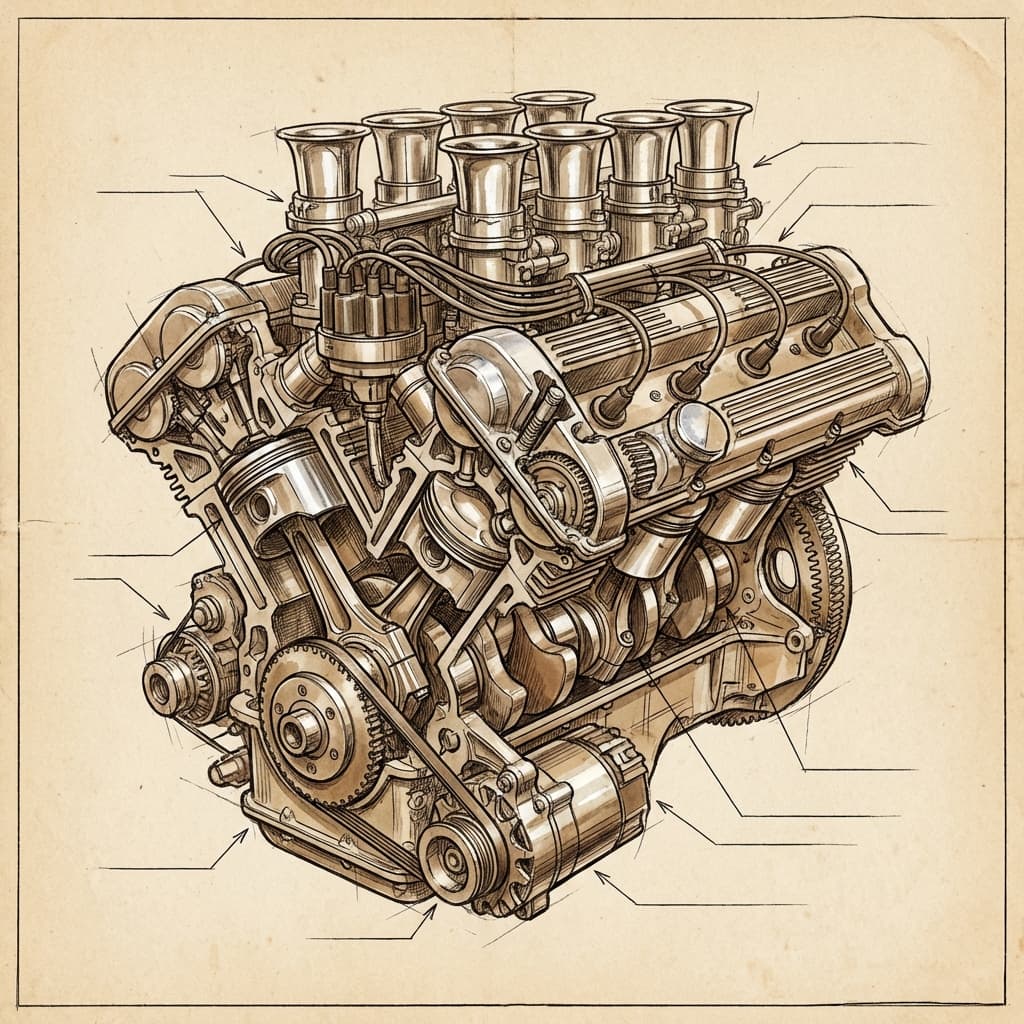
The Gurney-Weslake V12 was a masterpiece. Displacing 3.0 liters in accordance with contemporary Formula 1 regulations, it produced approximately 410 horsepower at 9,500 RPM—competitive with the best engines in the field.
The engine was not without its challenges. Reliability was a persistent concern, and the development program was costly. But when it ran well, the Weslake V12 was both powerful and sweet-sounding, its twelve cylinders producing a distinctive wail that fans still remember.
Ready for Belgium
By the 1967 Belgian Grand Prix, the Eagle-Weslake had shown flashes of speed but had been plagued by mechanical failures. Spa would be different.
The preparation for Belgium was intense. Gurney and his team knew that this circuit—with its long straights and high-speed corners—suited the Eagle's characteristics perfectly. The V12 engine thrived at sustained high RPMs. For Gurney, this race represented vindication. It was proof that his dream was achievable reality.
The Stage: Spa-Francorchamps 1967
The Most Dangerous Track in the World
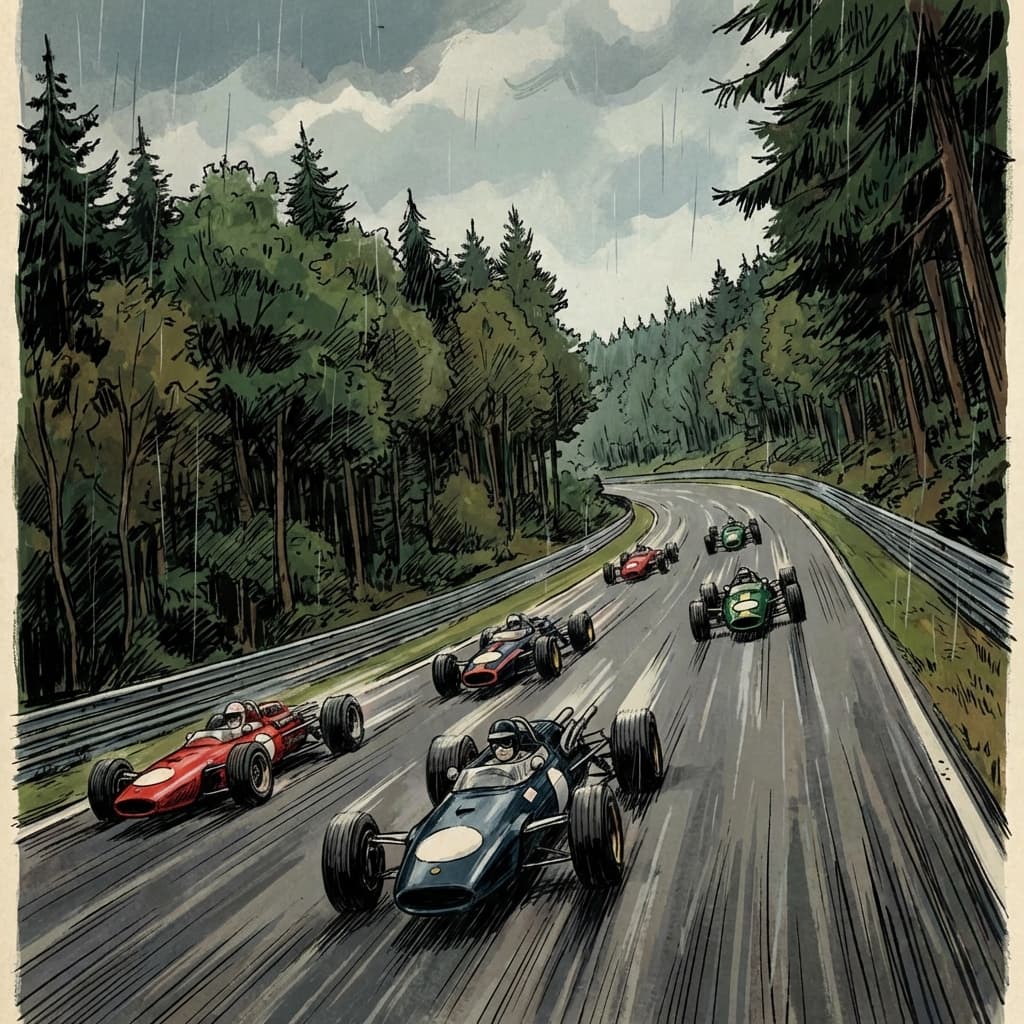
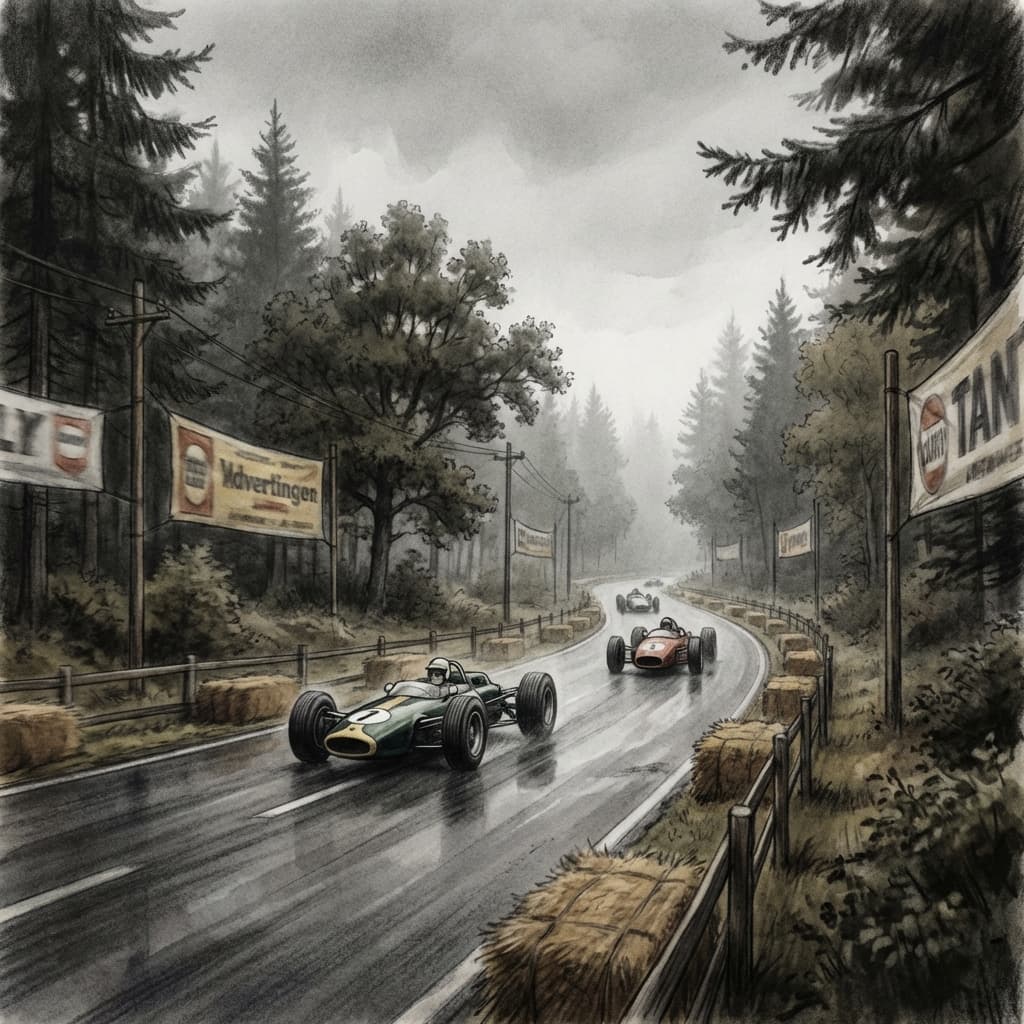
Spa-Francorchamps in 1967 bore little resemblance to the modern circuit. The original layout was 14.1 kilometers (8.76 miles) long, winding through the Belgian countryside on public roads closed for racing.
It was beautiful. It was fast. And it was extraordinarily dangerous.
La Source to Eau Rouge
The circuit included legendary corners etched in racing lore. La Source, the tight hairpin at the start, demanded precision before the long blast down the hill.
Then came Eau Rouge—the fearsome downhill-then-uphill esses that demanded absolute commitment. Average speeds at Spa regularly exceeded 140 miles per hour. A driver who crashed faced trees, ditches, and farmhouses—with little in the way of barriers.
The Ardennes Challenge
June in the Ardennes can be unpredictable. The circuit's elevation changes and microclimate meant rain could fall on one section while another remained dry. This made car setup a nightmare and rewarded drivers who could adapt.
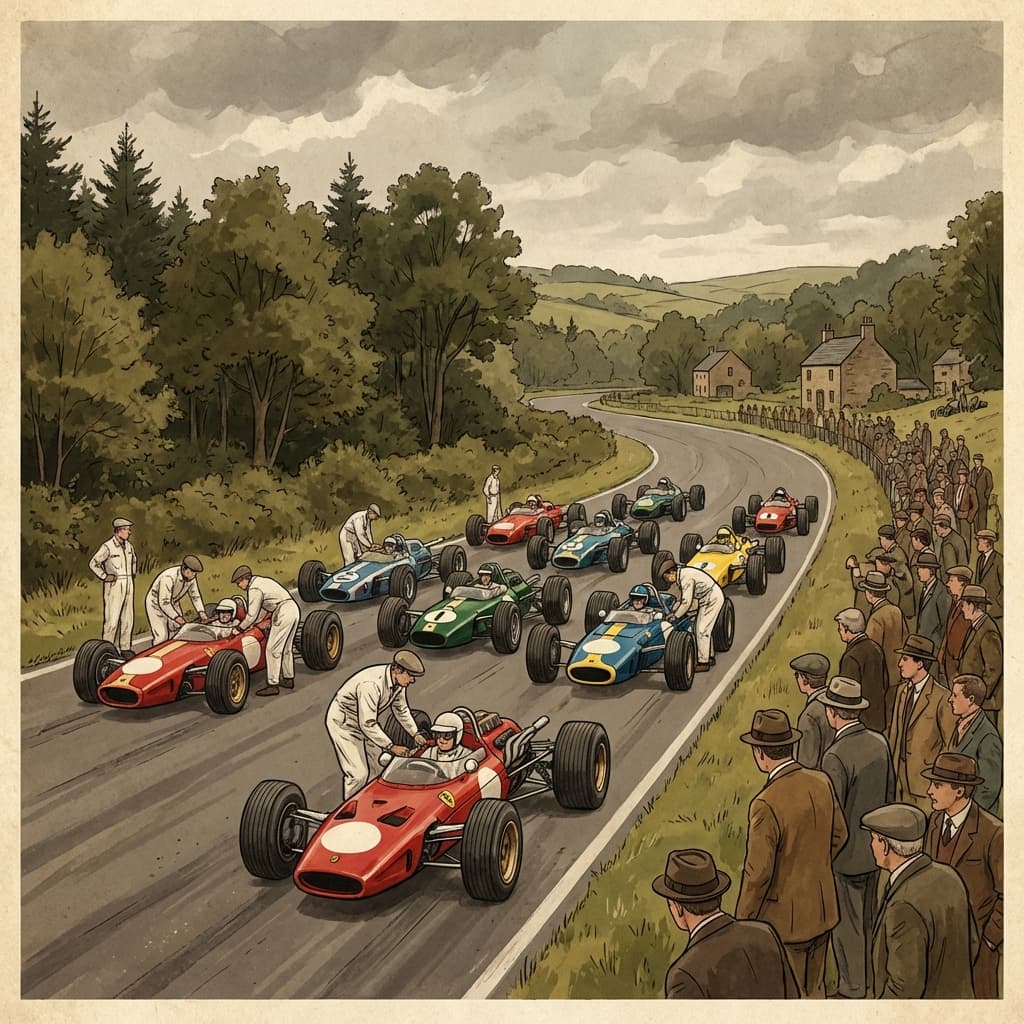
The atmosphere in the paddock that weekend was tense with anticipation. The 1967 World Championship was shaping up to be one of the most competitive in years. For smaller teams like AAR, simply finishing was often the goal. But Gurney had not come merely to participate.
The Entry List
The field for the XXVII Grand Prix de Belgique was formidable. Jim Clark, the reigning world champion, started from pole in his Lotus-Ford Cosworth, having set a qualifying time of 3:28.1—over 145 miles per hour average.
Gurney qualified second, 3.1 seconds behind. The Ferraris of Chris Amon, Mike Parkes, and Ludovico Scarfiotti were present. Jack Brabham and Denny Hulme brought their Brabhams. It was a field of champions and future champions.
The Race: 28 Laps of Glory
The Start
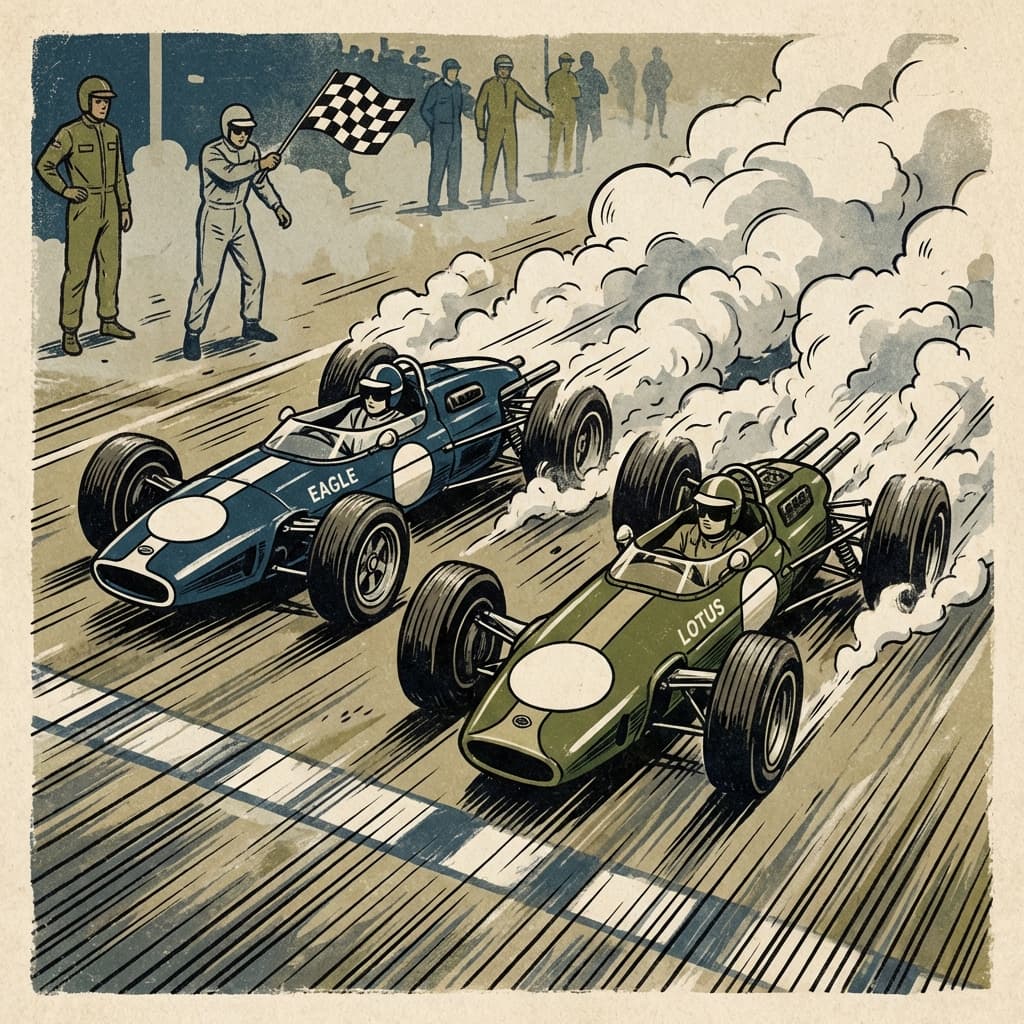
When the Belgian flag dropped to start the race, Jim Clark's Lotus launched into the lead, as expected. The Scot had dominated qualifying and was the clear favorite.
But Gurney was right there, slotting into second place and keeping the Lotus in sight. Behind them, the field jostled for position through La Source and down into Eau Rouge. The opening laps followed the expected script: Clark led, Gurney followed, and the rest fought for the remaining podium positions.
The Turning Point
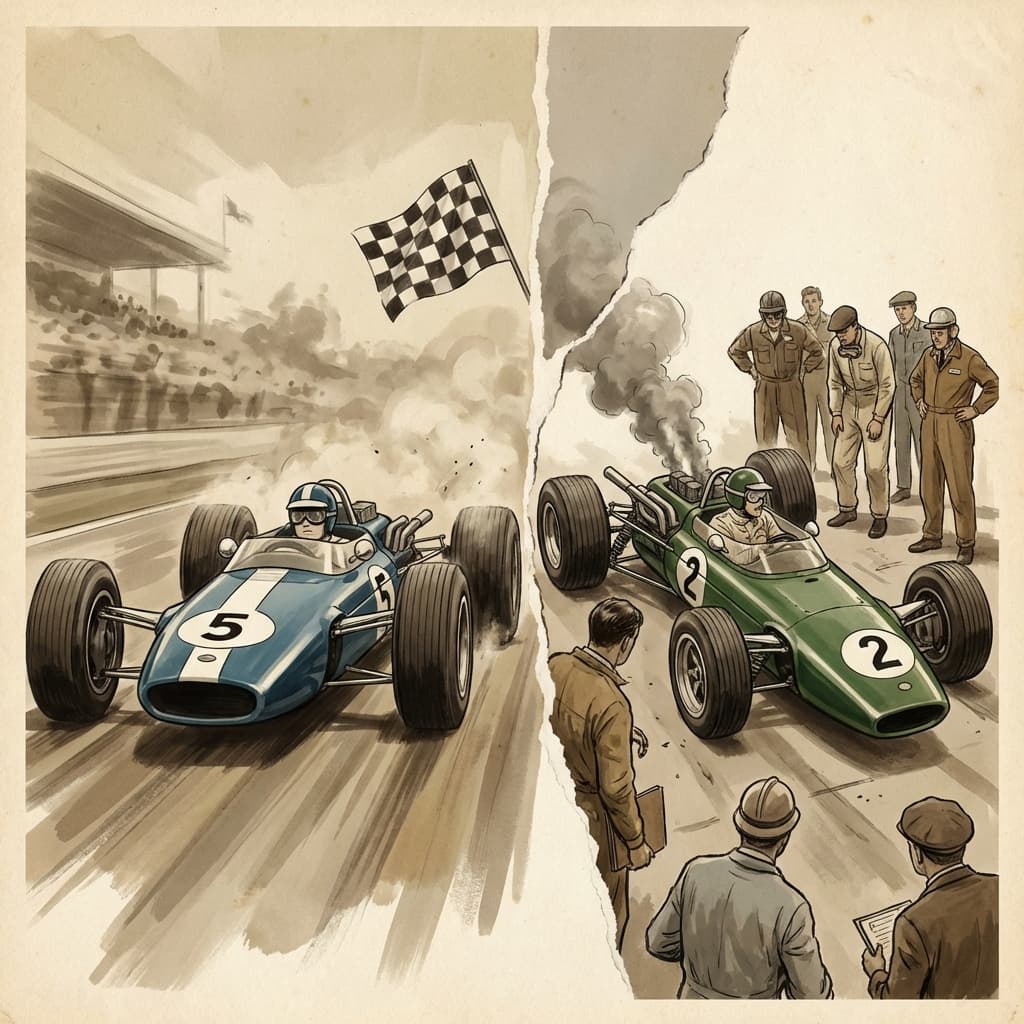
Then, on lap four, the complexion of the race changed. Jim Clark's Lotus began to slow, its Ford Cosworth engine misfiring. A spark plug issue would eventually force the reigning champion to pit and drop to the back of the field.
Gurney inherited the lead—but inheriting was one thing, keeping it was another. The Eagle was fast, but it had yet to prove it could survive the full race distance at Spa. Every lap was a question: would the car hold together?
A Masterclass
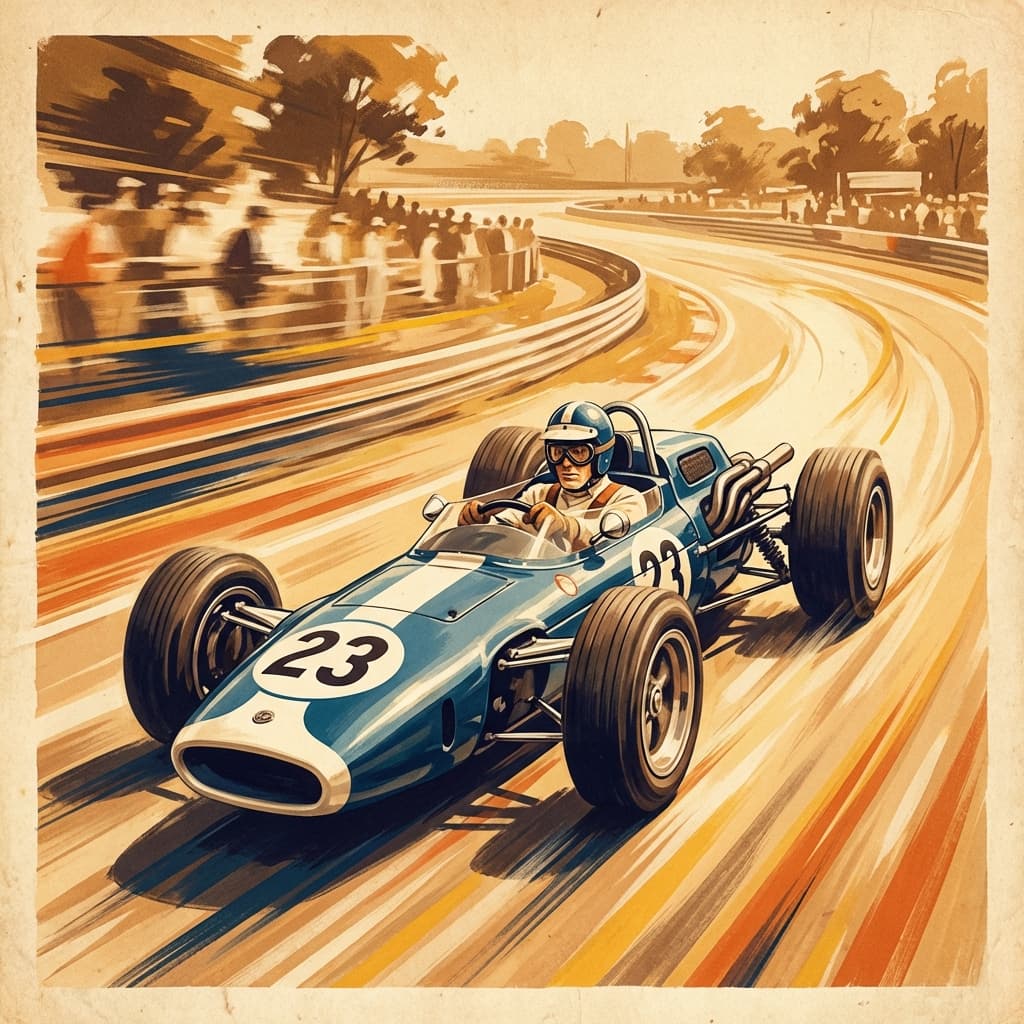
What followed was a demonstration of controlled aggression. Gurney was not content merely to lead; he extended his advantage lap after lap. By mid-race, the gap to second place had stretched to over thirty seconds.
The precision of Gurney's driving that day was remarkable. Every apex was hit with millimeter accuracy. Every gear change was seamless. On lap 19, he set the race's fastest lap: 3:31.9. Jackie Stewart, watching from second, would later describe it as one of the finest displays of driving he had witnessed.
The Final Laps
The closing stages of the race were a procession—but a tense one. In Formula 1, nothing is certain until the checkered flag falls. The spectre of mechanical failure haunted every lap.
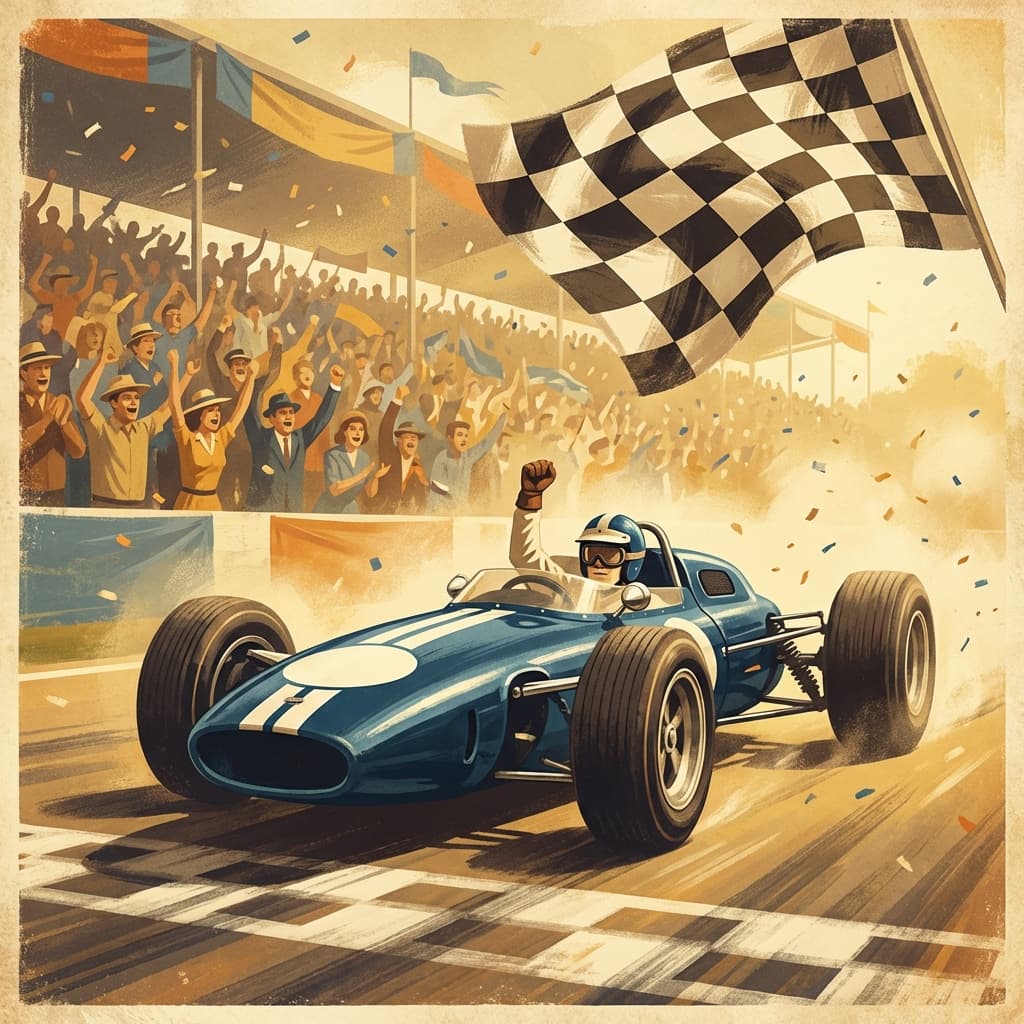
But the Eagle held together. Lap 27. Lap 28. And then, finally, the flag. The crowd rose to its feet as Gurney crossed the finish line. The Eagle, battered but victorious, completed its finest hour. Dan Gurney had done the impossible.
The Results
| Position | Driver | Team | Time/Gap |
|---|---|---|---|
| 1 | Dan Gurney | Eagle-Weslake | 1:40:49.4 |
| 2 | Jackie Stewart | BRM | +1:03.0 |
| 3 | Chris Amon | Ferrari | +1:40.0 |
| 4 | Jochen Rindt | Cooper-Maserati | +2:13.9 |
| 5 | Mike Spence | BRM | +1 Lap |
| 6 | Jim Clark | Lotus-Ford | +1 Lap |
The Aftermath: A Legend is Born
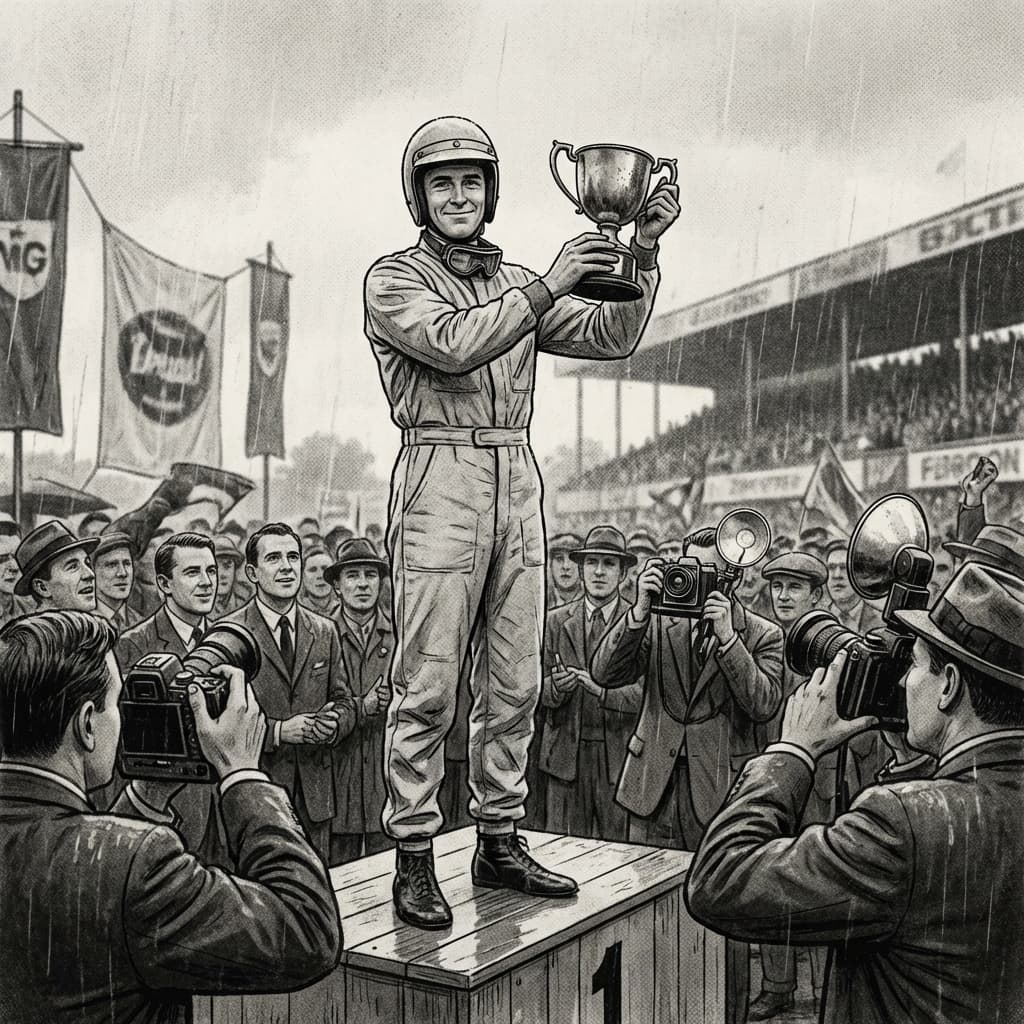
The Podium
On the podium, Gurney accepted his trophy with his characteristic mix of humility and quiet pride. He had done something extraordinary—something that might never be repeated—and he knew it.
The motorsport press recognized the significance immediately. Headlines celebrated the American triumph, the beauty of the Eagle, and the audacity of a driver who had dared to build his own car and then drive it to victory.
Le Mans Glory
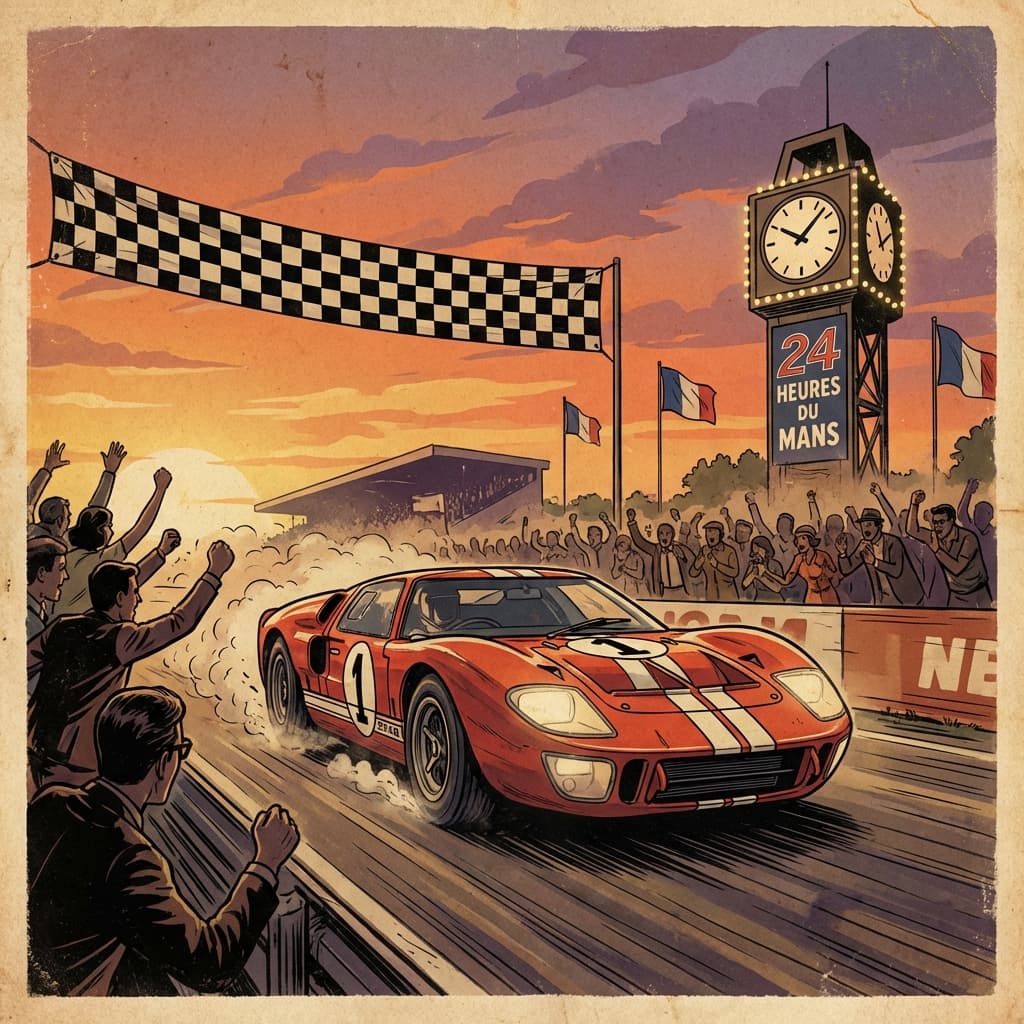
Just two weeks later, Gurney added another iconic moment to his legacy. At the 24 Hours of Le Mans, he and co-driver A.J. Foyt won the race in a Ford GT40 Mk IV.
It was the only all-American victory in Le Mans history: American drivers, American team (Shelby-American Inc.), American chassis, American engine, American tires. The summer of 1967 represented the peak of Gurney's career—winning both the Belgian Grand Prix and Le Mans in two weeks.
Birth of a Tradition
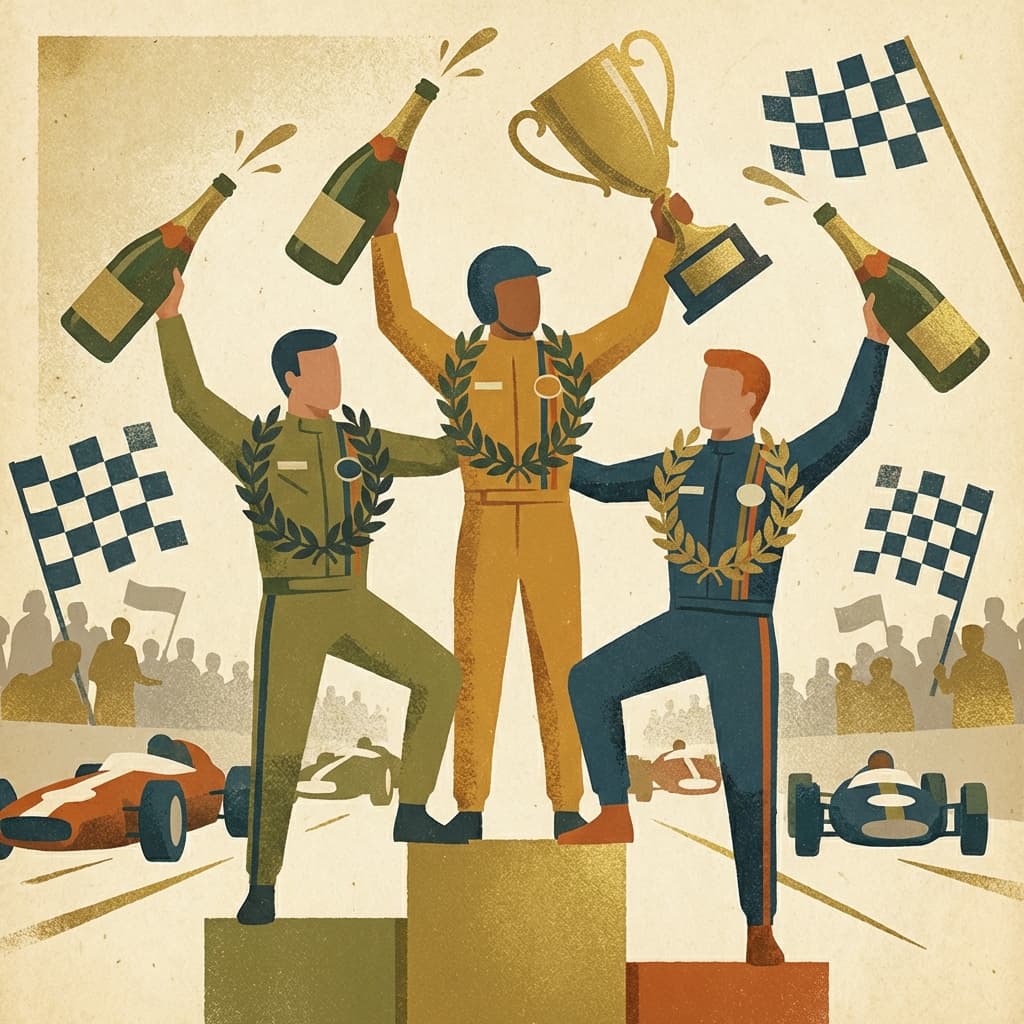
On that podium at Le Mans, Gurney did something spontaneous that would echo through sports history. Overcome with joy, he shook a magnum of Moët & Chandon champagne and sprayed it over everyone nearby—his teammate, team manager Carroll Shelby, photographers, and even Henry Ford II.
It was the birth of the champagne spray tradition that now marks podium celebrations across motorsport and beyond. 'I was not aware I was starting a tradition,' Gurney later reflected, 'that continues in winner's circles all around the world to this day.'
The Legacy: What It Meant
A Unique Achievement
Dan Gurney's 1967 Belgian Grand Prix victory remains unique in Formula 1 history. No other driver—not Jackie Stewart, not Ayrton Senna, not Michael Schumacher, not Lewis Hamilton—has won a World Championship Grand Prix in a car of their own construction.
Ferrari has won hundreds of Grands Prix. McLaren, Williams, and Mercedes have claimed title after title. But every one of those victories was achieved by drivers who did not design and build the cars they drove. Gurney did both.
The Eagle's Legacy
The Eagle company continued after 1967, though the Formula 1 program was eventually wound down due to financial constraints. The beautiful T1G remains on display at the Revs Institute in Naples, Florida, and at other automotive museums.
Gurney's AAR team found greater success in American racing, winning the 1968 Indianapolis 500 with Bobby Unser and enjoying a long association with Toyota in IMSA sports car racing.
Dan Gurney: The Complete Racing Driver
Gurney continued racing into the 1970s before transitioning to team ownership. His contributions extended far beyond the cockpit. The Gurney flap aerodynamic device, his advocacy for driver safety, and his role in shaping American road racing all formed part of his legacy.
He was inducted into the International Motorsports Hall of Fame in 1990 and the Motorsports Hall of Fame of America in 1991. Dan Gurney passed away on January 14, 2018, at the age of 86.
The Meaning of Spa 1967
For American motorsport, Gurney's victory at Spa was validation. It proved that American engineering, American ambition, and American drivers could compete with the best in the world.
For Formula 1, it was a reminder that the sport was not merely a European affair. And for Dan Gurney himself, it was the fulfillment of a dream—the moment when everything he had worked for came together in 28 laps of perfection on the roads of the Ardennes.
Conclusion
On that June afternoon in 1967, Dan Gurney accomplished something that may never be repeated. He won a Formula 1 Grand Prix in a car bearing his own name, built by his own team, powered by an engine he had commissioned.
The Eagle crossed the finish line first at Spa-Francorchamps, and in doing so, wrote one of the most remarkable chapters in the history of motorsport.
The blue and white Eagle, the tall Californian behind the wheel, the screaming Weslake V12—these images are etched into racing history. They represent the purest expression of what motorsport can be: the perfect fusion of man and machine, of courage and engineering, of dreams and determination.
Dan Gurney didn't just win a race at Spa. He did something that had never been done before, and has never been done since.
That is his legacy. That is his triumph.
References
Official Records
- FIA (Fédération Internationale de l'Automobile) – 1967 Belgian Grand Prix Official Results. fia.com
- Formula 1 – 1967 Belgian Grand Prix Race Report. formula1.com
- Stats F1 – 1967 Belgian Grand Prix Detailed Results. statsf1.com
Archives & Museums
- The Henry Ford Museum – Dan Gurney and the Eagle T1G Collection. thehenryford.org
- Revs Institute – Eagle T1G Display Information. revsinstitute.org
- All American Racers Official Archive – Team History and Legacy. allamericanracers.com
Hall of Fame Records
- International Motorsports Hall of Fame – Dan Gurney Induction (1990). motorsportshalloffame.com
- Automotive Hall of Fame – Dan Gurney Biography. automotivehalloffame.org
Contemporary Coverage
- Sports Illustrated Vault – Coverage of 1967 Formula 1 Season
- Autosport Magazine – Race Reports from 1967 Belgian Grand Prix
- Road & Track – Dan Gurney Features and Interviews (1960s)
The Champagne Tradition
- 24 Hours of Le Mans Official – History of the Champagne Spray Tradition. 24h-lemans.com
All statistics and results verified against official FIA records and contemporary race reports. This article celebrates the historic achievement of Dan Gurney and the All American Racers team at the 1967 Belgian Grand Prix.