Enron Scandal Explained: The Complete History of America's Largest Corporate Fraud
On December 2, 2001, Enron Corporation filed for Chapter 11 bankruptcy protection. With $63.4 billion in assets, it was the largest corporate bankruptcy in American history at the time. Within weeks, what had been celebrated as America's most innovative company was exposed as one of history's most elaborate corporate frauds.
The collapse destroyed the retirement savings of thousands of employees, wiped out billions in shareholder value, and brought down Arthur Andersen, one of the world's five largest accounting firms. By the time federal investigators finished their work, 22 people had been convicted of crimes, including Enron's CEO, President, CFO, Treasurer, and Chief Accounting Officer.
This article provides a comprehensive examination of the Enron scandal—from its origins in accounting manipulation to its legacy in American corporate law. Every fact presented here is drawn from official court records, Department of Justice press releases, SEC enforcement actions, FBI investigative summaries, and Congressional reports.
Table of Contents
- The Background: Enron's Rise to Power
- The Wrongdoing: How the Fraud Worked
- The Unraveling: From Warning Signs to Collapse
- The Investigation: Federal Response
- The Official Rulings: Convictions and Sentences
- The Aftermath: Victims and Compensation
- The Legacy: Sarbanes-Oxley and Corporate Reform
- Conclusion
The Background: Enron's Rise to Power

The Birth of an Energy Giant
Enron Corporation was formed in 1985 through the merger of Houston Natural Gas and InterNorth, two natural gas pipeline companies. Kenneth Lay, who had been CEO of Houston Natural Gas, became chairman and CEO of the combined entity.
The company was headquartered in Houston, Texas, and initially operated as a traditional natural gas pipeline business. However, the deregulation of energy markets in the late 1980s and 1990s opened new opportunities that would fundamentally transform the company.
The Natural Gas Policy Act of 1978 and the subsequent deregulation of natural gas prices under the Reagan administration created a new landscape for energy companies. Previously, natural gas prices had been regulated by the federal government. Deregulation meant that prices would now be determined by market forces—and companies that could navigate this new environment stood to profit enormously.
Enron positioned itself at the forefront of this transformation. Rather than simply transporting gas through pipelines, the company began to act as an intermediary, buying gas from producers and selling it to consumers at market prices. This shift from asset-based operations to trading-based operations would define Enron's trajectory.
The Shift to Energy Trading
Under Lay's leadership, and later with the strategic vision of Jeffrey Skilling, Enron transformed from a pipeline operator into an energy trading company. Skilling joined Enron in 1990 from McKinsey & Company, where he had consulted for the company.
Skilling championed a new business model: rather than simply owning and operating physical assets, Enron would become a market maker—buying and selling natural gas, electricity, and eventually dozens of other commodities. The company created markets where none had existed before.
By the mid-1990s, Enron had become the largest buyer and seller of natural gas in North America. It expanded into electricity trading, broadband services, water, metals, and even weather derivatives.
The Culture of Innovation
Enron cultivated an image as a forward-thinking, innovative company. It was named "America's Most Innovative Company" by Fortune magazine for six consecutive years, from 1996 to 2001.
The company attracted top talent from business schools and consulting firms, offering high salaries and a fast-paced, competitive culture. However, this same culture would later be identified as contributing to an environment where aggressive accounting practices were tolerated and even encouraged.
Enron's performance review system, known internally as "rank and yank," required managers to rank employees on a scale of 1 to 5. Those ranked in the bottom 15-20% faced termination. This created intense internal competition and, according to post-collapse analyses, may have encouraged employees to prioritize short-term results over sustainable business practices.
The company's Houston headquarters, a 50-story tower completed in 1983, became a symbol of corporate success. Inside, Enron's trading floor operated around the clock, with traders managing billions of dollars in energy contracts. The atmosphere was described by former employees as electric, aggressive, and intensely focused on quarterly earnings targets.
Enron's senior executives lived lavishly. Kenneth Lay maintained multiple residences and flew on corporate jets. Jeffrey Skilling was known for his competitive streak and demanding management style. The company spent millions on corporate retreats, sponsorships, and naming rights—including the Enron Field baseball stadium in Houston.
Key Executives
The individuals who would later face criminal charges held positions of immense power within the company:
- Kenneth Lay served as Chairman and CEO from 1986 until his resignation in January 2002, with a brief interruption when Skilling held the CEO title.
- Jeffrey Skilling joined in 1990, became President and COO in 1997, and was promoted to CEO in February 2001. He resigned suddenly in August 2001.
- Andrew Fastow was hired in 1990 and became CFO in 1998. He was terminated in October 2001.
- Richard Causey served as Chief Accounting Officer from 1999 until his termination in 2002.
The Stock Price Ascent
Enron's stock price reflected its perceived success. From a split-adjusted price of approximately $20 in 1998, Enron shares rose to an all-time high of $90.75 in August 2000. The company was valued at over $70 billion at its peak.
This meteoric rise was fueled by reported revenues that grew from $13.3 billion in 1996 to $100.8 billion in 2000. Enron had entered the Fortune 500's top ten. But these numbers, as federal investigators would later establish, were built on deception.
Wall Street analysts uniformly praised the company. Investment banks competed to underwrite Enron's debt offerings and to advise on its increasingly complex deals. Major institutional investors held significant positions in Enron stock, recommending it to their clients as a blue-chip investment.
The company's market capitalization peaked at approximately $70 billion in late 2000. At that point, Enron was the seventh-largest company in America by revenue. Its executives appeared on magazine covers, spoke at business conferences, and were consulted by policymakers on energy issues.
Behind the facade, however, the company was drowning in debt, propped up by accounting tricks, and dependent on an ever-increasing stock price to sustain its house of cards.
The Wrongdoing: How the Fraud Worked

The fraud at Enron was not a single act but a systematic pattern of deception spanning multiple years. According to court documents and the Powers Report—an internal investigation commissioned by Enron's board—the company used several interlocking schemes to hide debt, inflate profits, and manipulate its stock price.
Mark-to-Market Accounting Abuse
One of the central mechanisms of Enron's fraud was the abuse of mark-to-market (MTM) accounting.
Mark-to-market accounting allows a company to record the projected future value of a long-term contract as current revenue. This is a legitimate accounting method for certain financial instruments—but Enron applied it aggressively to energy contracts, booking decades of projected profits immediately upon signing a deal.
According to the SEC's enforcement action against Skilling, the company "improperly recognized revenue from long-term energy contracts by recording the entire estimated future value of the contracts at inception." When actual performance fell short of projections, Enron faced pressure to find new deals—or new accounting tricks—to cover the gap.
As the SEC stated in its 2004 complaint against Skilling: "Enron's improper use of mark-to-market accounting for its merchant investments and certain trading activities resulted in the overstatement of reported earnings."
Special Purpose Entities: LJM and Chewco
The most notorious aspect of Enron's fraud involved the use of Special Purpose Entities (SPEs). These were off-balance-sheet partnerships designed to hide debt and inflate profits.
According to the Powers Report, released in February 2002, CFO Andrew Fastow created and managed several SPEs, including:
- LJM1 (LJM Cayman LP): Created in June 1999, this entity was named after Fastow's wife and children (Lea, Jeffrey, Matthew). Fastow served as the general partner.
- LJM2 (LJM2 Co-Investment LP): A larger entity created in October 1999, which raised approximately $394 million from outside investors.
- Chewco: Created in 1997 to acquire an interest in a joint venture called JEDI, structured to keep debt off Enron's books.
The Powers Report concluded that these entities "were used by Enron Management to enter into transactions that it could not, or would not, do with unrelated commercial entities." Fastow personally profited by more than $30 million from his involvement in LJM partnerships, according to his plea agreement with the Department of Justice.
Hiding Debt
The SPEs allowed Enron to keep billions of dollars in debt off its balance sheet. When Enron needed to borrow money or dispose of poorly performing assets, it would transfer them to an SPE.
According to the Powers Report: "Enron used the Raptors to generate over $1 billion in earnings through transactions with entities that were, in substance, controlled by Enron itself."
The Raptors were a series of SPEs created between 2000 and 2001. They were designed to hedge Enron's investment losses using Enron's own stock. When Enron's stock price declined, the hedges failed—but Enron continued to report them as effective.
Manipulation of Financial Statements
The fraud extended to the quarterly and annual financial statements filed with the SEC. According to the DOJ, between 1999 and 2001:
- Enron overstated its earnings by hundreds of millions of dollars.
- The company failed to disclose related-party transactions with the Fastow-controlled entities.
- Earnings per share were artificially inflated.
In November 2001, Enron was forced to restate its financial statements for the years 1997 through 2000, reducing reported net income by $586 million and increasing reported debt by $2.6 billion.
The Role of Arthur Andersen
Arthur Andersen LLP, one of the "Big Five" accounting firms at the time, served as Enron's external auditor. According to court documents, Andersen's Houston office had approved Enron's accounting treatments, including the SPE structures.
When the SEC began its investigation in October 2001, Andersen employees in Houston—acting on instructions from in-house counsel—shredded thousands of documents related to the Enron audit.
On March 14, 2002, the Department of Justice indicted Arthur Andersen LLP on one count of obstruction of justice for destroying Enron-related documents. The indictment stated that Andersen "did knowingly, intentionally and corruptly persuade and attempt to persuade other persons... to withhold documents, and alter, destroy, mutilate and conceal objects with intent to impair the objects' integrity and availability for use in official proceedings."
The Unraveling: From Warning Signs to Collapse
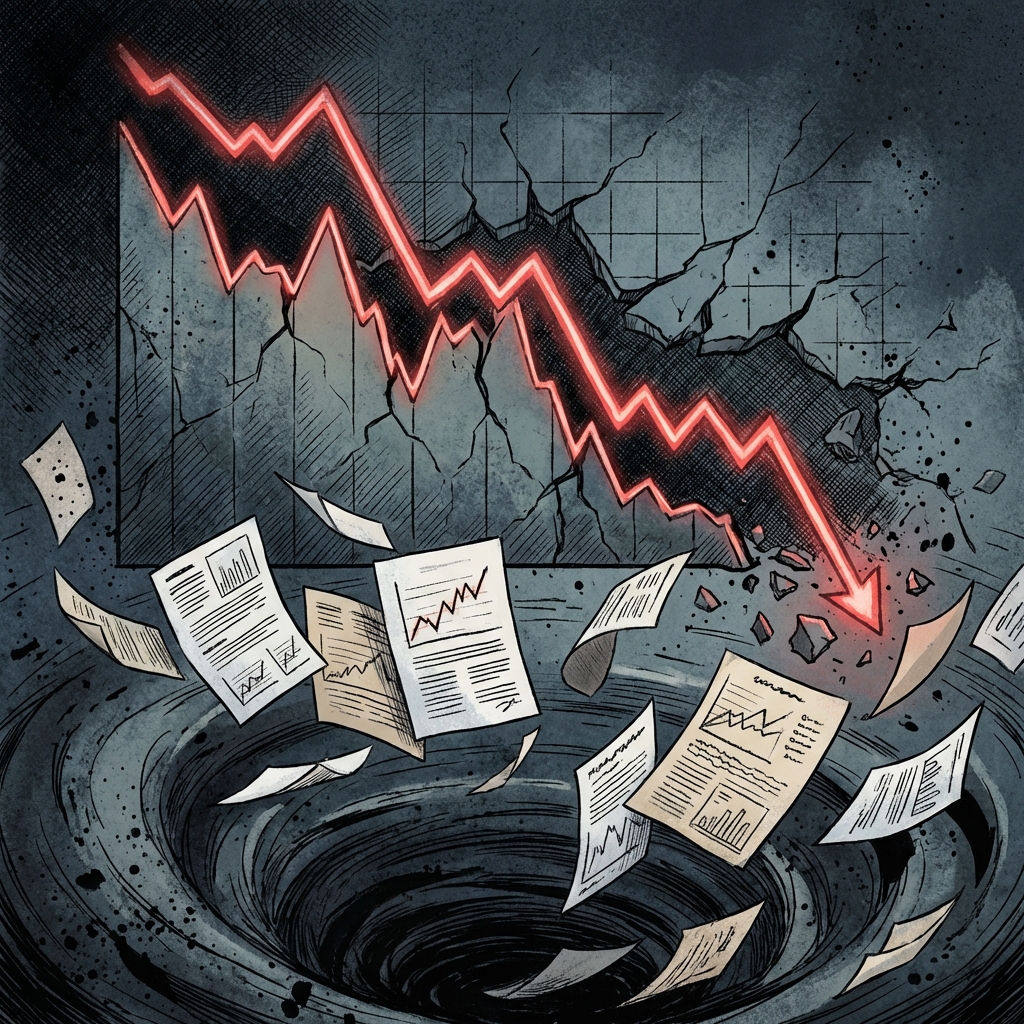
The collapse of Enron did not happen overnight. Warning signs accumulated throughout 2001, culminating in a rapid implosion in the fall. For employees, investors, and analysts who had believed in the company's proclaimed success, the unraveling was both shocking and swift.
The Skilling Resignation
On August 14, 2001, Jeffrey Skilling abruptly resigned as CEO after just six months in the position. He cited personal reasons. Kenneth Lay returned as CEO.
The sudden departure of the company's chief architect raised immediate questions. Enron's stock, already declining from its 2000 highs, dropped further on the news. Analysts speculated about what Skilling might know that investors did not. In his resignation letter, Skilling gave no indication of the financial problems that would soon be revealed.
In subsequent congressional testimony and legal proceedings, Skilling maintained that he had no knowledge of the fraud at the time of his resignation. Prosecutors argued otherwise, pointing to evidence that Skilling had been intimately involved in the company's accounting practices.
The Watkins Memo
On August 15, 2001—one day after Skilling's resignation—Sherron Watkins, a vice president for corporate development, sent an anonymous letter to Kenneth Lay.
The letter warned: "I am incredibly nervous that we will implode in a wave of accounting scandals." Watkins specifically identified concerns about the Raptor SPE transactions and the conflicts of interest involving Fastow.
Watkins later testified before Congress that Enron was "a house of cards" and that she believed the company's accounting practices could not withstand scrutiny. Her memo, which became a key piece of evidence in subsequent investigations, outlined specific concerns about the Raptor hedging vehicles and the conflicts inherent in having the CFO manage entities that did business with Enron.
Watkins requested a meeting with Lay, which took place on August 22, 2001. According to her congressional testimony, she warned Lay directly about the accounting issues. Lay subsequently asked Enron's outside law firm, Vinson & Elkins, to review the matters Watkins had raised. The law firm's report, completed in October 2001, did not substantiate her concerns—a conclusion that would later be criticized as inadequate.
The SEC Inquiry
On October 16, 2001, Enron announced a $638 million third-quarter loss and disclosed a $1.2 billion reduction in shareholders' equity related to the LJM partnerships.
On October 22, 2001, Enron acknowledged that the SEC had begun an informal inquiry into the LJM transactions. The next day, CFO Andrew Fastow was removed from his position.
On October 31, 2001, the SEC upgraded its inquiry to a formal investigation.
The Stock Collapse
The revelations triggered a catastrophic decline in Enron's stock price:
- August 2001: $40 per share
- October 2001: $20 per share
- November 2001: Below $1 per share
Thousands of Enron employees held company stock in their 401(k) retirement accounts. Many were prohibited from selling during a "lockout period" as the company transitioned to a new plan administrator—a lockout that coincided with the stock's collapse.
The Bankruptcy Filing
On November 8, 2001, Enron filed amended financial statements with the SEC, acknowledging that it had overstated earnings since 1997 and understated debt by $2.6 billion.
On December 2, 2001, Enron Corporation filed for Chapter 11 bankruptcy protection in the Southern District of New York. With $63.4 billion in assets, it was the largest bankruptcy in American history at that time.
Approximately 4,000 employees were laid off in the immediate aftermath.
The Investigation: Federal Response

The collapse of Enron triggered one of the largest federal investigations in American history.
The Enron Task Force
In January 2002, the Department of Justice created the Enron Task Force—a multi-agency team of prosecutors and investigators dedicated to the case.
According to the FBI's official summary of the investigation:
"The five-year FBI investigation led to the conviction of 22 individuals, including Enron's chief executive officer, president and chief operating officer, chief financial officer, treasurer, chief accounting officer, as well as the heads of a number of business units."
The Task Force included personnel from the FBI, the IRS Criminal Investigation Division, the SEC, and the Department of Justice. The investigation involved reviewing millions of documents, interviewing hundreds of witnesses, and tracing complex financial transactions across multiple jurisdictions.
The scale of the investigation was unprecedented for a corporate fraud case. At its peak, the Task Force employed dozens of prosecutors, FBI agents, and forensic accountants. They worked out of offices in Houston, near Enron's headquarters, to facilitate access to witnesses and documents.
According to the FBI, the investigation required agents to develop expertise in areas they had rarely encountered before, including derivatives trading, structured finance, and mark-to-market accounting. The complexity of Enron's financial arrangements meant that investigators had to essentially learn the company's business from the ground up.
Congressional Hearings
Beginning in January 2002, multiple Congressional committees held hearings on the Enron collapse:
- The Senate Committee on Commerce, Science, and Transportation
- The Senate Banking, Housing, and Urban Affairs Committee
- The House Committee on Energy and Commerce
Key Enron executives testified (or invoked the Fifth Amendment) before these committees. Andrew Fastow invoked his Fifth Amendment right against self-incrimination. Kenneth Lay also invoked the Fifth before one committee.
The Powers Report
On February 2, 2002, Enron's own board of directors released the "Report of Investigation by the Special Investigative Committee of the Board of Directors of Enron Corp."—known as the Powers Report, after committee chairman William Powers Jr.
The report concluded:
"The transactions between Enron and the LJM partnerships resulted in Enron reporting earnings from the third quarter of 2000 through the third quarter of 2001 that were almost $1 billion higher than should have been reported."
The Powers Report provided a detailed accounting of the SPE transactions and the failures of corporate governance that allowed them to occur.
SEC Enforcement Actions
The SEC brought civil enforcement actions against multiple Enron executives:
- February 2003: SEC charged Fastow with fraud, money laundering, and other violations.
- February 2004: SEC charged Skilling with violating anti-fraud, reporting, and internal controls provisions of federal securities laws.
- July 2004: SEC reached a settlement with Enron itself (in bankruptcy) regarding the company's violations.
The SEC's enforcement actions ran parallel to the criminal prosecutions, allowing the agency to pursue civil penalties and injunctions against the executives. In total, the SEC brought actions against more than a dozen individuals connected to the Enron fraud, seeking disgorgement of ill-gotten gains, civil fines, and permanent bars from serving as officers or directors of public companies.
The Official Rulings: Convictions and Sentences
The criminal prosecutions stemming from the Enron scandal resulted in significant convictions and prison sentences. The trials were closely watched by the financial press, legal community, and the thousands of former employees and shareholders who had lost their savings in the collapse. For prosecutors, the cases represented an opportunity to demonstrate that corporate executives could be held personally accountable for fraud.
Andrew Fastow
Andrew Fastow, Enron's former CFO, was the first senior executive to be charged.
Charges: On October 31, 2002, Fastow was indicted on 78 counts, including fraud, money laundering, and conspiracy.
Plea Agreement: On January 14, 2004, Fastow pleaded guilty to two counts of conspiracy to commit wire and securities fraud. According to the DOJ press release, Fastow admitted to "conspiring to manipulate Enron's publicly reported financial results and enriching himself through improper transactions."
Sentence: On September 26, 2006, Fastow was sentenced to six years in federal prison—four years less than the 10 years he had initially agreed to in his plea deal. The reduction was granted due to his extensive cooperation with prosecutors and his testimony against Lay and Skilling.
Fastow served approximately five years and was released from custody. He also forfeited $23.8 million as part of his plea agreement.
Jeffrey Skilling
Jeffrey Skilling, Enron's former CEO, maintained his innocence and went to trial.
Trial: The trial of Jeffrey Skilling and Kenneth Lay began on January 30, 2006, in Houston, Texas.
Verdict: On May 25, 2006, a jury convicted Skilling on 19 of 28 counts, including:
- One count of conspiracy to commit securities and wire fraud
- Twelve counts of securities fraud
- Five counts of making false statements to auditors
- One count of insider trading
He was acquitted on nine counts of insider trading.
Initial Sentence: On October 23, 2006, Skilling was sentenced to 24 years and 4 months in federal prison. He was also ordered to forfeit $45 million and pay $630 million in fines.
Resentencing: In 2013, as part of an agreement with prosecutors, Skilling's sentence was reduced to 14 years (168 months). In exchange, he dropped further appeals and agreed to forfeit approximately $42 million for distribution to Enron fraud victims.
Release: Skilling was released from federal custody in February 2019 after serving 12 years.
Kenneth Lay
Kenneth Lay, Enron's founder and chairman, was tried alongside Skilling.
Verdict: On May 25, 2006, Lay was convicted on all six counts in the jury trial:
- One count of conspiracy
- Two counts of wire fraud
- Three counts of securities fraud
In a separate bench trial before Judge Sim Lake, Lay was also convicted of one count of bank fraud and three counts of making false statements to banks—bringing his total convictions to 10 counts.
Potential Sentence: Lay faced a potential maximum sentence of 175 years in prison.
Death and Vacated Conviction: On July 5, 2006, Kenneth Lay died of a heart attack while vacationing in Aspen, Colorado. He was 64 years old.
On October 17, 2006, Judge Lake vacated Lay's conviction based on the legal doctrine of "abatement ab initio"—because Lay died before his appeal could be heard, his conviction was erased as if it had never occurred. This meant that victims could not pursue restitution claims against Lay's estate based on the criminal conviction.
Richard Causey
Richard Causey, Enron's Chief Accounting Officer, was also indicted.
Plea: In December 2005, Causey pleaded guilty to securities fraud.
Sentence: In November 2006, he was sentenced to 66 months (5.5 years) in federal prison.
Arthur Andersen LLP
The accounting firm Arthur Andersen was prosecuted separately.
Indictment: On March 14, 2002, Arthur Andersen LLP was indicted on one count of obstruction of justice for destroying Enron-related documents.
Conviction: On June 15, 2002, a jury in Houston convicted Arthur Andersen of obstruction of justice.
Sentence: On October 16, 2002, Arthur Andersen was sentenced to five years of probation and fined $500,000.
Supreme Court Reversal: On May 31, 2005, the U.S. Supreme Court unanimously overturned the conviction in Arthur Andersen LLP v. United States. The Court ruled that the jury instructions had been too vague—they did not properly convey that the firm's employees must have known their conduct was unlawful.
Aftermath: Despite the reversal, the conviction had already destroyed the firm. Arthur Andersen had surrendered its CPA licenses and its right to practice before the SEC. The firm, which had employed 85,000 people worldwide, effectively ceased to exist as a viable business.
Summary of Key Sentences
| Name | Position | Conviction | Sentence |
|---|---|---|---|
| Jeffrey Skilling | CEO | 19 counts (conspiracy, securities fraud, insider trading) | 14 years (resentenced from 24) |
| Andrew Fastow | CFO | 2 counts (conspiracy) | 6 years |
| Kenneth Lay | Chairman/CEO | 10 counts (conspiracy, fraud, false statements) | Vacated (died before sentencing) |
| Richard Causey | CAO | 1 count (securities fraud) | 5.5 years |
The Aftermath: Victims and Compensation
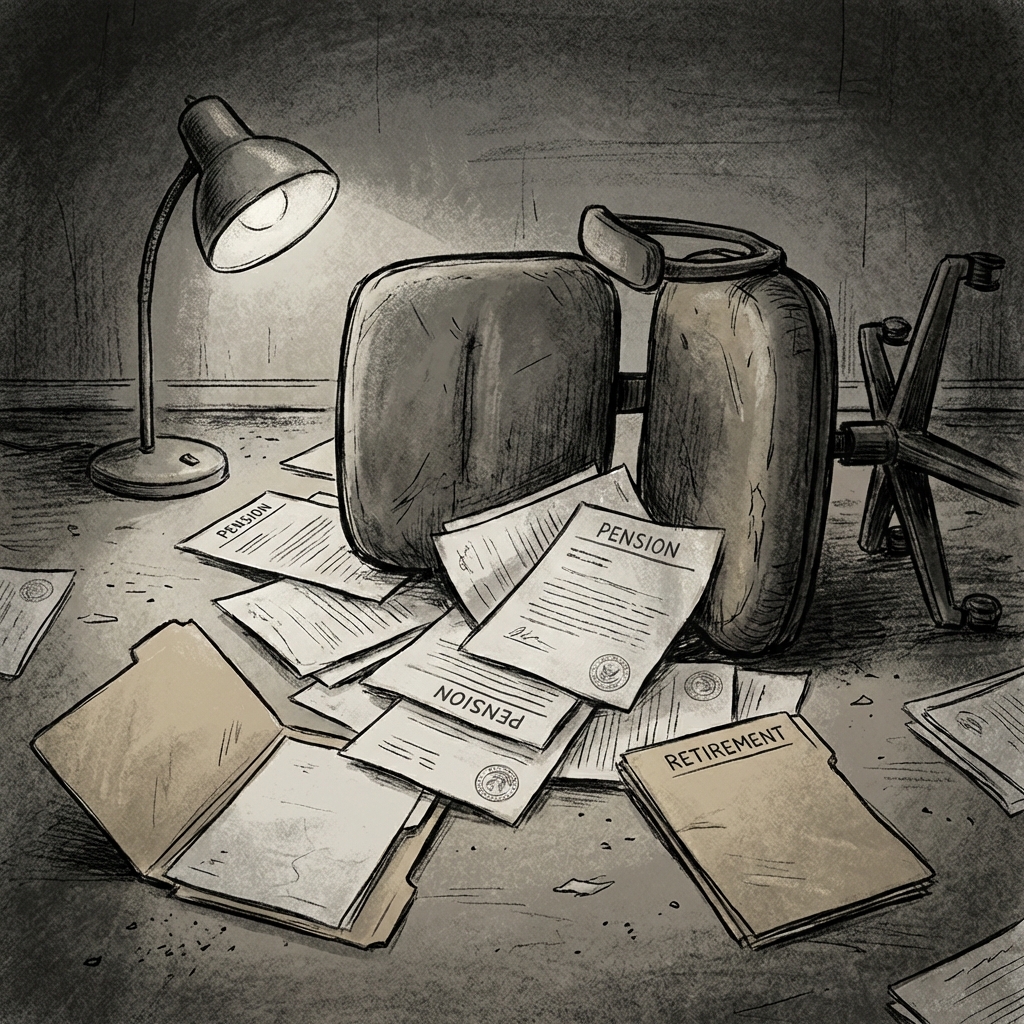
The Enron collapse caused widespread harm to employees, shareholders, and pensioners.
Employee Losses
Approximately 20,000 Enron employees lost their jobs following the bankruptcy. Many also lost their retirement savings.
Enron had encouraged employees to invest their 401(k) retirement funds in company stock. According to reports submitted to Congress, more than 60% of assets held in the Enron 401(k) plan were invested in Enron stock as of late 2000.
When the stock collapsed, employees saw their retirement savings decimated. Many were unable to sell during the critical period due to a plan administrative lockout.
Congressional testimony revealed that some employees lost retirement accounts worth hundreds of thousands of dollars. Meanwhile, senior executives had diversified their holdings and, in some cases, sold stock before the crash.\n\nThe disparity between executive and employee outcomes became a focal point of congressional hearings. While ordinary workers saw their life savings evaporate, records showed that Kenneth Lay had sold approximately $300 million in Enron stock in the years before the collapse. Jeffrey Skilling sold shares worth tens of millions. These sales, while legal at the time, underscored the perception that insiders had escaped while ordinary employees bore the brunt of the losses.
Shareholder Lawsuit
Shareholders filed a class-action lawsuit against Enron, its executives, its board of directors, and its outside advisors.
According to court filings, the shareholder class ultimately received approximately $7.2 billion in settlements from various defendants, including:
- Major banks that had financed Enron's SPE transactions
- Arthur Andersen
- Enron's former officers and directors
This represented only a fraction of the estimated $60–$70 billion in shareholder losses.
Forfeiture and Restitution
Federal prosecutors secured substantial forfeitures as part of the criminal cases:
- According to the FBI's summary, more than $105 million was forfeited to help compensate victims of the fraud.
- Skilling was ordered to forfeit approximately $42 million as part of his 2013 resentencing agreement.
- Fastow forfeited $23.8 million.
Pension Losses
Enron's pension plan also suffered. While the 401(k) losses fell directly on employees, the company's defined-benefit pension plan was insured by the Pension Benefit Guaranty Corporation (PBGC).
The PBGC took over Enron's pension obligations, becoming responsible for paying benefits to approximately 11,000 participants. However, the federal insurance limits meant that some higher-paid employees received reduced benefits.
The Legacy: Sarbanes-Oxley and Corporate Reform
The Enron scandal, along with contemporaneous frauds at WorldCom, Tyco, and other companies, led to sweeping reforms in American corporate governance and financial regulation.
The Sarbanes-Oxley Act of 2002
On July 30, 2002, President George W. Bush signed the Sarbanes-Oxley Act (SOX) into law. The legislation, sponsored by Senator Paul Sarbanes and Representative Michael Oxley, was described by President Bush as "the most far-reaching reforms of American business practices since the time of Franklin Delano Roosevelt."
Key provisions of the Sarbanes-Oxley Act include:
CEO/CFO Certification (Sections 302 and 906): The CEO and CFO of public companies must personally certify the accuracy and completeness of their company's financial statements. False certification is a criminal offense, punishable by up to 20 years in prison.
Internal Controls (Section 404): Public companies must establish, assess, and report on the effectiveness of their internal controls over financial reporting. External auditors must attest to management's assessment.
Audit Committee Independence (Section 301): Public companies must establish independent audit committees, composed entirely of independent directors, responsible for overseeing the external auditor.
Auditor Independence (Title II): Accounting firms are prohibited from providing certain non-audit services to their audit clients. Audit partners must rotate off engagements every five years.
Document Retention (Section 802): Knowingly destroying or falsifying documents to obstruct a federal investigation is a felony punishable by up to 20 years in prison. This provision was a direct response to Arthur Andersen's document shredding.
Whistleblower Protection (Section 806): Employees of public companies who report fraud are protected from retaliation. This provision addressed the treatment of whistleblowers like Sherron Watkins.
The Public Company Accounting Oversight Board
The Sarbanes-Oxley Act created the Public Company Accounting Oversight Board (PCAOB), a nonprofit organization overseen by the SEC.
The PCAOB's responsibilities include:
- Registering public accounting firms that audit public companies
- Establishing auditing, quality control, and ethics standards
- Conducting inspections of registered accounting firms
- Investigating potential violations and imposing sanctions
Before Enron, the accounting profession was largely self-regulated. The creation of the PCAOB represented a fundamental shift toward external oversight.
Enhanced Penalties
The Sarbanes-Oxley Act significantly increased criminal penalties for corporate fraud:
- Securities fraud: Maximum sentence increased to 25 years
- Wire fraud and mail fraud: Maximum sentence increased to 20 years
- Destroying or falsifying records: Maximum sentence of 20 years
- Failure to certify financial reports: Up to $5 million in fines and 20 years in prison
Lasting Impact on Corporate Governance
The reforms triggered by Enron extended beyond legislation. Companies adopted enhanced governance practices:
- Board independence requirements tightened at major stock exchanges
- Executive compensation disclosure became more detailed
- Internal audit functions were strengthened
- Clawback policies for executive compensation became more common
The Enron scandal also changed how investors, analysts, and regulators approach complex corporate structures. Off-balance-sheet financing, related-party transactions, and SPEs now receive far greater scrutiny.
The "Big Five" Becomes the "Big Four"
The destruction of Arthur Andersen reduced the major global accounting firms from five to four: Deloitte, PricewaterhouseCoopers, Ernst & Young, and KPMG.
The remaining firms faced increased scrutiny and, in the years following Enron, implemented their own reforms to strengthen audit quality and independence.
Conclusion
The Enron scandal remains one of the most significant corporate frauds in American history. The confirmed facts, established through federal investigations, criminal trials, and official reports, tell a story of systematic deception at the highest levels of a major corporation.
Twenty-two individuals were convicted of crimes. Jeffrey Skilling served 12 years in federal prison. Andrew Fastow served five years. Kenneth Lay was convicted on 10 counts but died before sentencing, causing his convictions to be vacated. Arthur Andersen, once one of the world's most prestigious accounting firms, was destroyed.
The financial toll was immense: $63.4 billion in assets lost to bankruptcy, billions in shareholder value erased, thousands of employees' retirement savings decimated. The human cost—in ruined careers, lost savings, and shattered trust—cannot be fully quantified.
Yet the Enron scandal also produced lasting change. The Sarbanes-Oxley Act fundamentally altered corporate governance in America. The Public Company Accounting Oversight Board brought external oversight to a profession that had long regulated itself. CEO and CFO certification of financial statements became mandatory. Document destruction to obstruct investigations became a serious felony.
More than two decades later, the Enron scandal continues to be studied in business schools, law schools, and accounting programs worldwide. It serves as a case study in the consequences of unchecked ambition, the failure of corporate governance, and the importance of regulatory oversight.
The official record is clear. The convictions were secured. The sentences were served. The reforms were enacted. The Enron scandal is not a matter of speculation or allegation—it is a confirmed chapter of American corporate history, documented in thousands of pages of court records, SEC filings, and Congressional testimony.
References
Government & Regulatory Sources
- U.S. Department of Justice – "Former Enron CEO Jeffrey Skilling Resentenced to 168 Months" (June 21, 2013). justice.gov
- U.S. Department of Justice – "Former Enron Chief Financial Officer Andrew S. Fastow Pleads Guilty to Conspiracy to Commit Securities and Wire Fraud" (January 14, 2004). justice.gov
- U.S. Department of Justice – "Enron's Lay, Skilling Convicted" Press Release (May 25, 2006). justice.gov
- U.S. Securities and Exchange Commission – SEC v. Jeffrey K. Skilling, Civil Action (February 2004). sec.gov
- Federal Bureau of Investigation – "Enron" Case Summary. fbi.gov
Court Documents
- United States v. Jeffrey K. Skilling, No. 04-cr-00025 (S.D. Tex.) – Indictment, Trial, and Sentencing Records
- United States v. Kenneth L. Lay, No. 04-cr-00025 (S.D. Tex.) – Verdict and Abatement Order
- United States v. Andrew S. Fastow, No. 02-cr-00665 (S.D. Tex.) – Plea Agreement and Sentencing
- United States v. Arthur Andersen LLP, No. 02-cr-00121 (S.D. Tex.) – Indictment and Conviction
- Arthur Andersen LLP v. United States, 544 U.S. 696 (2005) – Supreme Court Reversal
Official Reports
- Powers Report – "Report of Investigation by the Special Investigative Committee of the Board of Directors of Enron Corp." (February 1, 2002). William C. Powers Jr., Chairman.
- U.S. Senate Committee on Governmental Affairs – "The Role of the Board of Directors in Enron's Collapse" (July 8, 2002).
- U.S. House Committee on Energy and Commerce – Enron Investigation Hearing Transcripts (January–February 2002).
News & Archives (for historical context)
- The New York Times – Various articles on Enron coverage (2001–2006)
- The Wall Street Journal – Various articles on Enron coverage (2001–2006)
- Houston Chronicle – Local coverage of Enron collapse and trials (2001–2006)
- Wayback Machine – web.archive.org – Archived Enron corporate website pages
All facts presented in this article have been verified against primary source documents from the Department of Justice, Securities and Exchange Commission, Federal Bureau of Investigation, and official court records.