The Art of Macro Investing: Navigating Global Markets
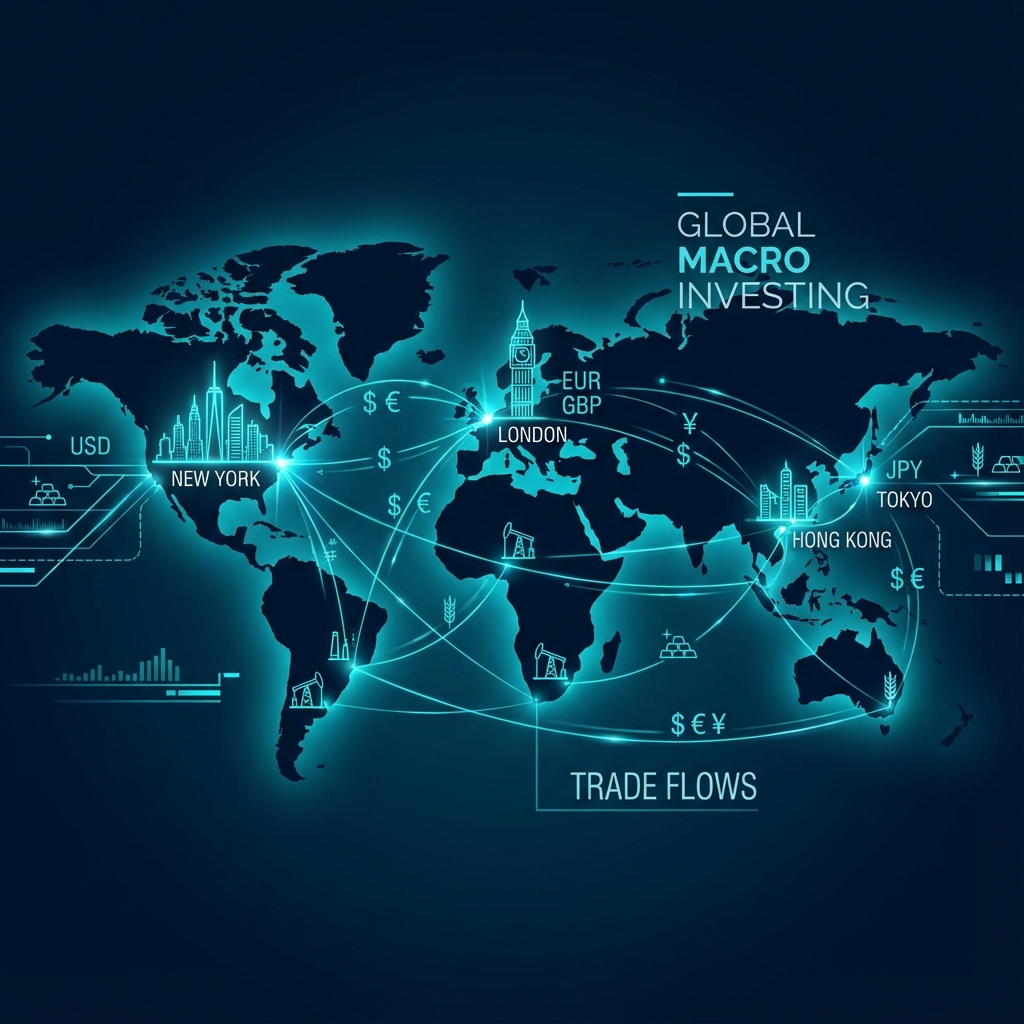
The Art of Macro Investing: Navigating Global Markets
Most investors look at a stock's earnings. Global Macro investors look at the world.
Macro investing involves trading based on large-scale economic and political events. It's the strategy of legends like George Soros (who "Broke the Bank of England") and Stanley Druckenmiller. They don't care about which iPhone feature Apple released; they care about what the Federal Reserve, the ECB, and the Bank of Japan are doing with the price of money.
This guide covers the pillars of the Macro framework.
1. The Central Bank: The Eye of Sauron
The Central Bank (Fed, ECB, BOJ) controls the most important variable in finance: Interest Rates.
- The Risk-Free Rate: The yield on US Treasury bonds acts as gravity for all other assets.
- Rates UP: Gravity increases. Valuations of stocks, crypto, and real estate come DOWN. (Cost of borrowing rises, discounting of future cash flows increases).
- Rates DOWN: Gravity decreases. Assets float UP.
The Fed Pivot: The moment the Federal Reserve changes direction (from hiking to cutting, or vice versa) is often the most profitable moment in the multi-year cycle.
2. Forex (FX): The Scorecard of Nations
Currencies are always traded in pairs (EUR/USD, USD/JPY). They represent the relative strength of two economies.
Drivers of Currency Strength
- Interest Rate Differential: Money flows to where it is treated best (highest yield). If the US pays 5% interest and Japan pays 0%, capital flows to the USD (The "Carry Trade").
- Economic Growth: Strong GDP growth attracts foreign investment.
- Trade Balance: A country that exports more than it imports has a demand for its currency.
3. Bonds: The Smart Money
The Bond market is far larger and "smarter" than the stock market.
- The Yield Curve: A plot of interest rates for bonds of different maturities (2-year vs. 10-year).
- Inverted Yield Curve: When short-term rates are higher than long-term rates. This has predicted every recession since 1950.
- Why? It means investors expect future growth to crash, forcing the Fed to cut rates in the long run.
4. Commodities: The Raw Inputs
Commodities (Oil, Gold, Copper, Wheat) tell you about the physical economy.
- Copper ("Dr. Copper"): Used in everything (homes, electronics). Rising copper prices signal global economic expansion.
- Gold: The anti-fiat. Moves inversely to "Real Yields" (Interest Rate minus Inflation). It is a hedge against monetary debasement and geopolitical chaos.
- Oil: The lifeblood. High oil prices act as a tax on consumers and can trigger recessions.
5. Putting It All Together: The Quadrant Framework
We can categorize the economic environment into four quadrants based on Growth and Inflation.
1. Goldilocks (Growth Rising, Inflation Falling)
- Best for: Stocks (Tech), Real Estate.
- Era: The 2010s, 2020-2021.
2. Reflation (Growth Rising, Inflation Rising)
- Best for: Commodities, Emerging Markets, Cyclical Stocks (Banks, Energy).
3. Stagflation (Growth Falling, Inflation Rising)
- The Nightmare Scenario.
- Best for: Gold, TIPS (Inflation Protected Securities), Oil, Cash.
- Worst for: Stocks, Bonds (Prices fall as yields rise).
4. Deflationary Bust (Growth Falling, Inflation Falling)
- The Recession.
- Best for: Long-term Government Bonds (Yields crash, prices soar), Cash.
Conclusion
Macro investing is 3D Chess. A war in the Middle East spikes oil, which spikes inflation, which forces the Fed to hike rates, which crashes the S&P 500. Everything is connected. By understanding these linkages, you stop reacting to headlines and start anticipating them.
Disclaimer: Macroeconomics is complex and subject to change.