The Isabella Stewart Gardner Museum Heist: The Empty Frames of Boston
The Isabella Stewart Gardner Museum Heist: The Empty Frames of Boston
In the early morning hours of March 18, 1990, as the city of Boston slept after St. Patrick's Day celebrations, two men in police uniforms buzzed the security door of the Isabella Stewart Gardner Museum. Eighty-one minutes later, they walked out with thirteen masterpieces, including works by Rembrandt, Vermeer, Manet, and Degas.
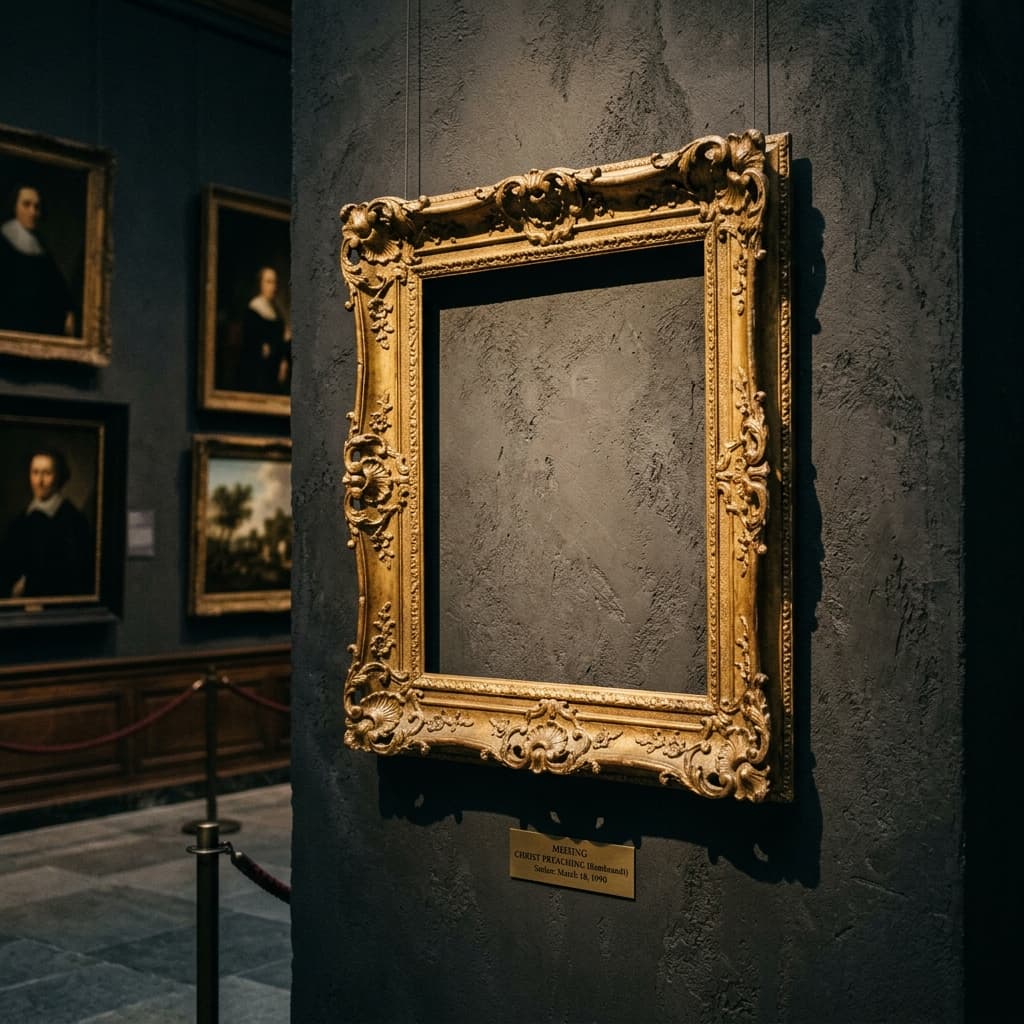
Valued at an estimated $500 million, it remains the largest property theft in history. But the true tragedy is not just the monetary value; it is the permanent loss of these cultural treasures. Per the strict terms of Isabella Stewart Gardner's will, the museum’s collection must remain exactly as she arranged it. Consequently, the empty gilded frames still hang on the walls—a haunting, silent monument to the missing masterpieces.
This article reconstructs the events of that fateful night, explores the bizarre list of stolen items, and details the primary theories that have baffled the FBI and art investigators for over three decades. For another deep-dive into high-profile crimes, see our Antwerp Diamond Heist story—the largest diamond robbery in history.
Table of Contents
- The Museum and its Eccentric Founder
- Timeline of the Heist
- The Stolen Masterpieces: A Bizarre Selection
- The Theories: Who Stole the Gardner Art?
- The Legacy of the Empty Frames
- References
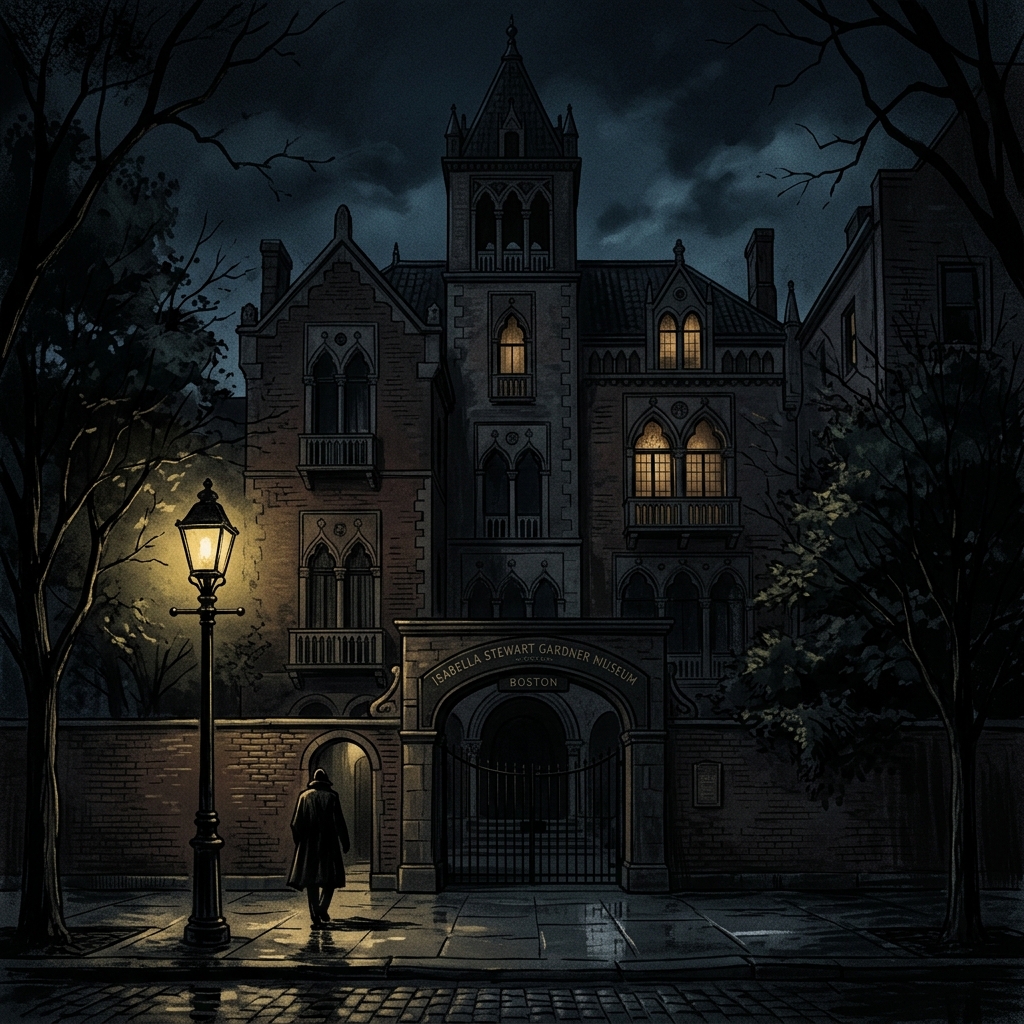
The Museum and its Eccentric Founder
The Isabella Stewart Gardner Museum is unlike any other art institution in the world. Opened in 1903 by Isabella Stewart Gardner, a wealthy and eccentric Boston socialite, the museum was designed to resemble a 15th-century Venetian palace. The building surrounds a lush, light-filled central courtyard, and the rooms are packed with a dense, highly personal arrangement of world-class paintings, sculptures, furniture, and tapestries.
Gardner was a passionate collector, acquiring masterpieces by Rembrandt, Botticelli, Raphael, and Titian under the guidance of art historian Bernard Berenson. But her most famous legacy is her ironclad will. When she died in 1924, she left a $1 million endowment with a strict, permanent condition: if any of the artworks were moved, rearranged, or if new works were added, the entire museum and its endowment would be forfeited and given to Harvard University.
This mandate meant that when the thieves struck in 1990, the museum was legally forbidden from replacing the stolen works or rearranging the rooms. The empty frames had to stay exactly where they were.
Timeline of the Heist
The heist was executed with alarming ease, exploiting low-wage night security and a series of critical security errors. Scroll down to walk through the timeline of the robbery minute-by-minute.
1:00 AM – The Silent Opening
The night was manned by two young, inexperienced watchmen: Rick Abath, a 23-year-old music student, and Randy Hestand, working his first-ever night shift. During his initial patrol, Abath was startled by fire alarms, which he quickly turned off. Before returning to the security desk, Abath did something unexplained: he briefly opened and closed the museum side door, a security breach captured by the desk logs.
1:24 AM – The Trap is Sprung
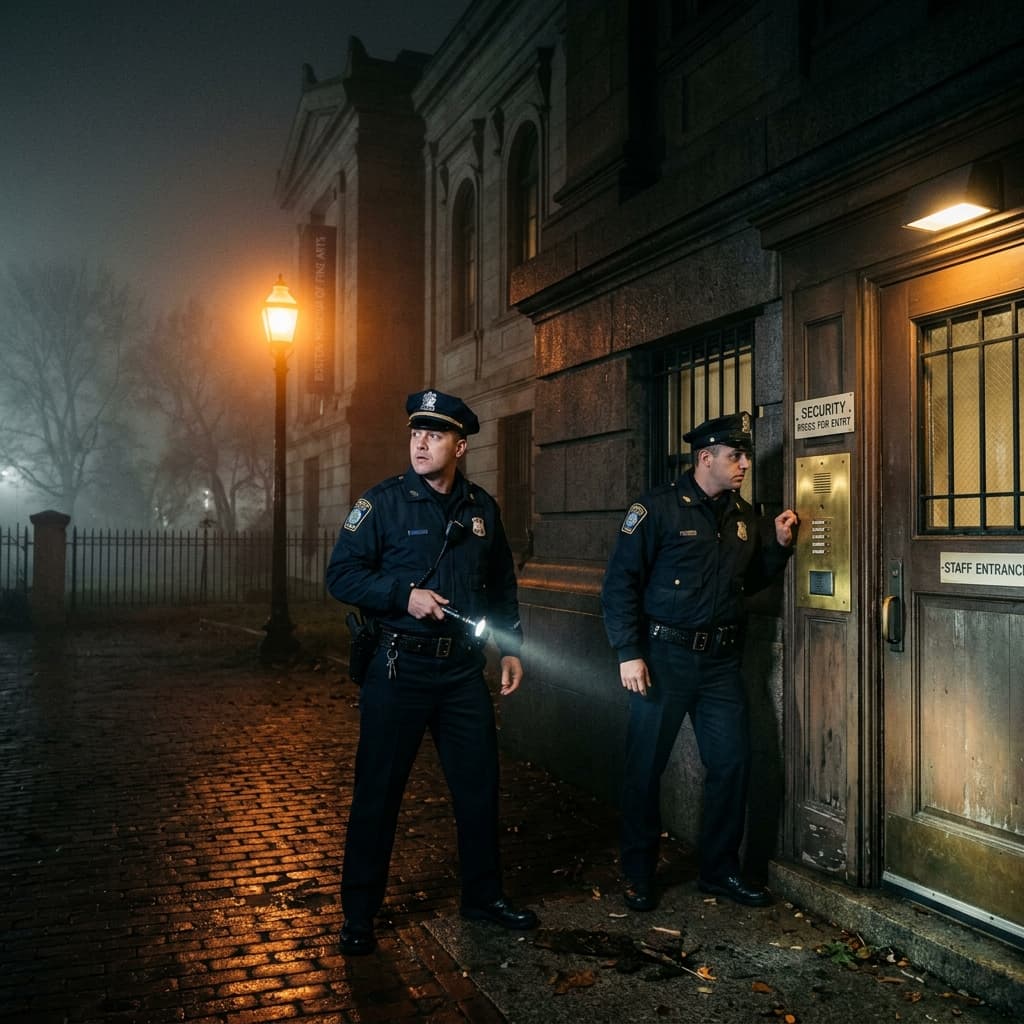
Two men disguised as Boston police officers rang the side entrance buzzer, claiming to respond to a disturbance in the courtyard. Abath, violating protocol, buzzed them in. The taller officer looked at Abath and said, "You look familiar. We have a warrant for your arrest." Terrified, Abath stepped away from the desk—and the only panic button—allowing the thieves to handcuff him. They quickly subdued Hestand when he returned from patrol.
1:48 AM – Ripping the Canvases
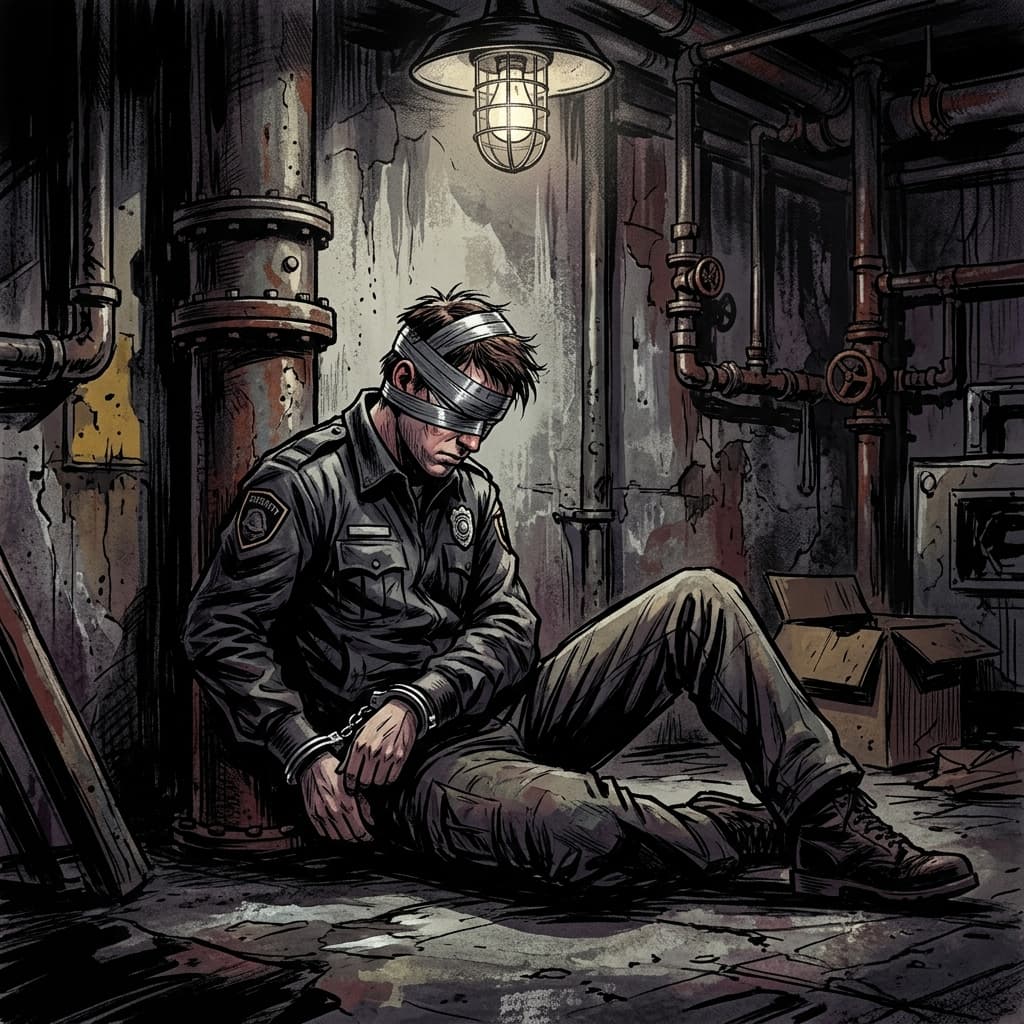
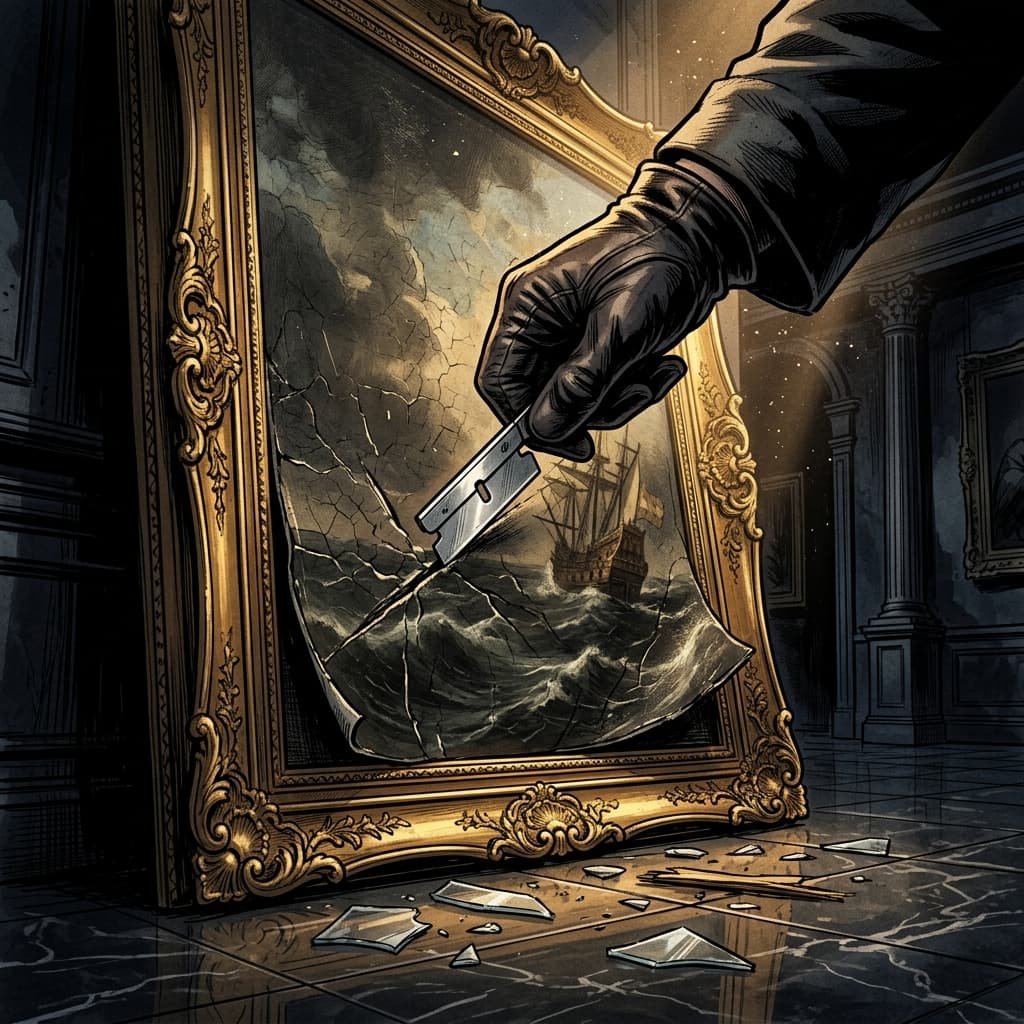
After wrapping duct tape around the guards' eyes, mouths, and hands, the thieves dragged them to the basement and chained them to steam pipes. The thieves then headed to the second floor. Entering the Dutch Room, they smashed proximity sensors. Moving with brutal haste, they ripped canvases off the walls, threw them onto the marble floor, and slashed them out of their stretchers with razor blades.
2:30 AM – Bizarre Selections
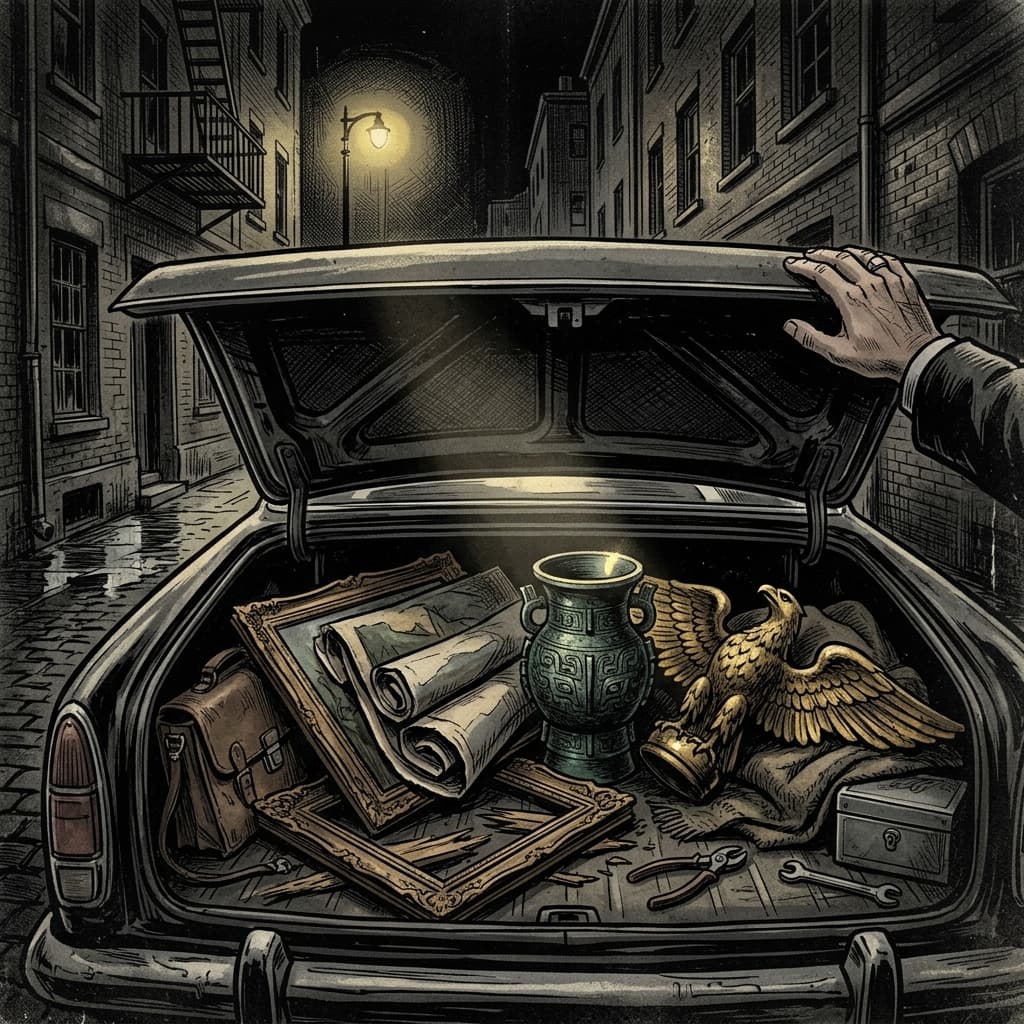
The thieves spent 81 minutes inside—an extraordinarily long time for a heist. Their choices were baffling. They took Rembrandt's seascape The Storm on the Sea of Galilee and Vermeer's The Concert. However, they bypassed far more valuable works nearby. Instead, they stole a worthless Chinese bronze gu and unscrewed a gilded bronze eagle finial from a Napoleonic flag, mistakenly thinking it was gold.
2:45 AM – The Silent Exit
After checking on the guards in the basement and asking, "Are you comfortable?", the thieves left the museum in two separate trips. They took the security video cassettes from the VCR. A lingering mystery remains: motion detectors recorded no movement in the Blue Room during the heist, yet Manet's Chez Tortoni was stolen from it. The only footsteps recorded there that night belonged to Abath during his early patrol.
The Stolen Masterpieces: A Bizarre Selection
The list of stolen items continues to puzzle art historians and law enforcement. The thirteen items taken in the heist do not represent the most valuable pieces in the museum, leading to theories that the thieves were either uneducated about art or working under very specific, narrow instructions.
The Major Treasures
- Vermeer’s The Concert: One of only 34 known works by Johannes Vermeer, it is considered the most valuable stolen painting in the world, worth upwards of $200 million.
- Rembrandt’s The Storm on the Sea of Galilee: Rembrandt's only painted seascape, depicting Christ calming the storm on the Sea of Galilee.
- Rembrandt’s A Lady and Gentleman in Black: A double portrait painted in 1633.
The Bizarre Choices
- Chinese Bronze Gu: A bronze vessel from the Shang Dynasty, worth very little compared to the paintings the thieves left behind.
- Napoleonic Eagle Finial: A gilded bronze eagle that sat atop a Napoleonic flag. The thieves spent considerable time trying to unscrew it, likely believing it was solid gold.
- Degas Sketches: Five drawings on paper by Edgar Degas, which were relatively minor compared to major paintings in the same room.
The thieves walked right past Titian's The Rape of Europa, widely considered one of the most important paintings in America, which was in a nearby room. This bizarre cherry-picking suggests they were not art experts, but rather hired hands or low-level mobsters.
The Theories: Who Stole the Gardner Art?
Over the past three decades, the FBI has investigated thousands of leads. While the statute of limitations on the theft itself expired in 1995 (meaning the thieves can no longer be prosecuted for the robbery), the search for the art remains active. Three primary theories stand out:
1. The Boston Mafia (Bobby Donati & Robert Guarente)
The most prominent FBI theory links the heist to the local Boston Mob. Bobby Donati, a mob associate with ties to the Patriarca crime family, is believed to have planned the heist to use the artwork as a get-out-of-jail card for caporegime Vincent Ferrara. Donati was seen visiting Ferrara in prison and reportedly said, "I'm going to do something to get you out."
However, Donati was brutally murdered in a mob turf war in 1991, just a year after the heist. The secret of the art's location likely died with him. Another mob associate, Robert Gentile, was suspected of hiding the paintings in his Connecticut home. When the FBI polygraphed Gentile, he failed when asked if he knew where the paintings were. A search of his property revealed a secret ditch in his shed, but it was empty. Gentile died in 2021, taking any secrets to his grave.
2. The IRA Connection (Whitey Bulger)
Boston's legendary Irish mob boss, Whitey Bulger, controlled the city's criminal underworld in 1990. It is highly unlikely a heist of this scale could happen in Boston without his permission or knowledge. Scotland Yard investigators proposed that Bulger’s crew funnelled the art to the Irish Republican Army (IRA) to use as leverage against the British government.
The tricking of the fire alarms at 1:00 AM on the night of the heist was a known IRA calling card used in previous operations. While Bulger was captured in 2011 and murdered in prison in 2018, no concrete link to the IRA was ever established.
3. The 1994 Anonymous Letter
In 1994, the museum received an anonymous letter from a writer who claimed to be a negotiator representing a group that held the paintings. The writer offered to return the art in exchange for $2.6 million and immunity from prosecution. To prove their identity, the writer asked the museum to publish a coded message in the Boston Globe.
The museum complied, printing the code, and received a second letter. However, the writer expressed terror that federal law enforcement was close to identifying them and withdrew the offer. The writer was never heard from again.
4. The Midnight Ride of 1997
In 1997, a Boston antique dealer named William Youngworth claimed he could facilitate the return of the paintings. He drove journalist Tom Mashberg to a dark warehouse in Brooklyn in the middle of the night. By the light of a flashlight, Youngworth showed Mashberg a painting that appeared to be Rembrandt's The Storm on the Sea of Galilee.
Mashberg wrote a front-page article about the experience. However, when the FBI raided the warehouse months later, they found nothing. Whether it was a elaborate hoax or a genuine lead remains a mystery.
The Legacy of the Empty Frames
Today, the Isabella Stewart Gardner Museum is a thriving institution, attracting hundreds of thousands of visitors every year. But the shadow of March 18, 1990, hangs heavy.
The empty frames in the Dutch Room and Blue Room serve as a constant reminder of the vulnerability of art and the enduring mystery of the heist. The museum continues to offer a $10 million reward for information leading to the safe return of the artworks.
For now, the frames remain empty—waiting for the return of the masterpieces that once brought them to life.
References
- Isabella Stewart Gardner Museum Official Heist Page - Official case details and reward information.
- FBI Boston Gardner Museum Art Theft - Official FBI updates and case status.
- The Gardner Heist: The World's Greatest Art Theft - Britannica - Historical overview of the heist.
- This Is a Robbery: The World's Biggest Art Heist (Netflix) - Documentary series detailing the timelines and suspects.
- The Empty Frames - Boston Globe Special Report - In-depth local investigative reporting.