The Lufthansa Heist: How America's Biggest Cash Robbery Unfolded
The Lufthansa Heist: How America's Biggest Cash Robbery Unfolded
The Lufthansa heist was the largest cash robbery in American history. On December 11, 1978, six men walked into the Lufthansa cargo terminal at New York's John F. Kennedy International Airport and walked out with $5.875 million in cash and jewelry—equivalent to approximately $28 million in 2024. The entire operation took just seven minutes.
But the heist was only the beginning. What followed was one of the most brutal trails of murder and betrayal in American organized crime history. Within years, six of the seven men directly involved in the heist would be dead—most murdered by their own associates. The only survivor was Henry Hill, who became a government informant and testified against his former colleagues.
This article reconstructs the confirmed history of the Lufthansa heist based on court documents, official police reports, and investigative journalism. For another deep-dive into the world of high-stakes heists, see our Antwerp Diamond Heist story—the largest diamond robbery in history.
Table of Contents
- The Setup: JFK's Vulnerable Heart
- The Players: Who's Who in the Heist
- The Planning: An Inside Job
- The Heist: Seven Minutes That Shook America
- The Fallout: Money, Greed, and Blood
- The Murder Trail: Six Bodies
- The Legacy: Unsolved Questions
- References
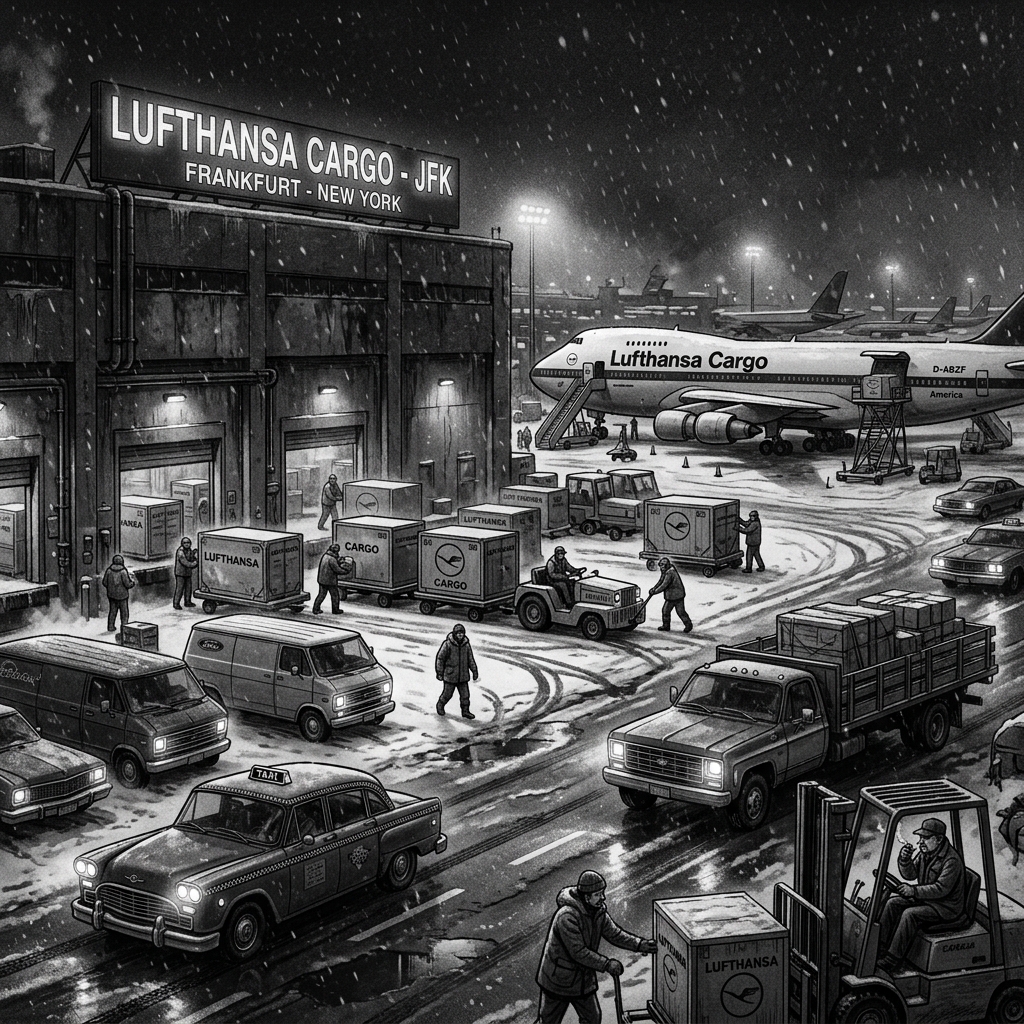
The Setup: JFK's Vulnerable Heart
In the 1970s, the Lufthansa cargo terminal at JFK International Airport was a bustling hub of international commerce. As West Germany's national airline, Lufthansa operated regular cargo flights connecting New York to Frankfurt and beyond. The terminal handled millions of dollars in currency, precious goods, and valuables moving between continents.
But what made the cargo terminal particularly vulnerable was its role in the global economy of the era. In 1978, before the advent of sophisticated digital tracking and biometric security, the terminal relied on physical locks, manual inventories, and a small staff of guards. The vault at the cargo terminal stored cash—primarily Deutsche marks destined for international exchange—and valuable shipments awaiting customs clearance.
The security at the terminal was, by modern standards, laughable. A simple lock mechanism protected the vault. Guards were low-wage employees, not highly trained security professionals. The assumption was that anyone with access to the terminal was authorized—primarily airline employees and approved customs brokers.
This assumption would prove fatal to the airline's bottom line.
The Context of 1978
To understand the heist, one must understand the state of organized crime in America in 1978. The Lucchese crime family, one of New York's "Five Families," controlled much of the illegal activity in the city—from gambling operations to drug trafficking to hijacking.
The Lucchese family had a particular interest in the airports. JFK, LaGuardia, and Newark served as major hubs for the movement of contraband—from drugs to stolen goods to cash. The cargo terminals were natural targets for enterprising criminals who had insiders.
The stage was set.
The Players: Who's Who in the Heist
The Lufthansa heist was not the work of a random group of thieves. It was a carefully orchestrated operation involving members of the Lucchese crime family, each bringing a specific skill set to the operation.
James "Jimmy the Gent" Burke (1932-1996)
The mastermind of the operation was James Burke, known as "Jimmy the Gent." Burke was a high-ranking member of the Lucchese crime family and had been involved in organized crime since the 1950s. He was known for his intelligence, his patience, and his willingness to use extreme violence when necessary.
Burke hadconnections throughout the New York criminal underworld and had the ear of the family's leadership. He was not a brute-force criminal; he was a strategist. The Lufthansa heist was his blueprint.
Frederick "Freddie" Myers (1947-1985)
The inside man was Frederick Myers, known as Freddie. Myers worked at the Lufthansa cargo terminal as a cargo loader—giving him legitimate access to the vault area and knowledge of the security routines. He was the one who provided the critical intelligence: when the vault was least guarded, how the locks worked, and when shipments of cash were expected.
Myers was not a made man—a full member of the Mafia—but he was a valuable associate who could be trusted with sensitive information. His role was critical.
Henry Hill (1943-2012)
Henry Hill was the facilitator—the man who connected Burke to the operation. A Lucchese associate who worked at JFK as a cargo agent, Hill had worked with both Myers and Burke on previous occasions. He was the one who arranged the meeting between Burke and Myers, bridging the gap between the criminal mastermind and the inside man.
Hill's role would prove crucial for a different reason: after the heist, he became the only member of the inner circle to turn informant.
The Crew
The remaining members of the crew were:
- Joseph "Joe the Animal" Armitage: A dangerous associate known for his violent temperament
- Albert "Albie" Vioni: A veteran of cargo terminal operations
- John "Jack" Locascio: Another Lucchese associate
- George "Gerry" Eraclano: One of the younger crew members
Together, these seven men would execute the heist that became the largest cash robbery in American history.
The Planning: An Inside Job
The Lufthansa heist was not a spur-of-the-moment decision. It was the culmination of months—some investigators argue years—of careful planning and intelligence gathering.
The Intelligence Network
Freddie Myers provided the critical intelligence. As a cargo loader, he had access to the inner workings of the terminal. He knew the guard schedules. He knew when cash shipments arrived. He knew which nights the terminal was virtually deserted.
Over months, Myers fed information to Henry Hill, who relayed it to James Burke. The plan took shape gradually—a careful operation that would exploit every vulnerability in the terminal's security.
The Rehearsals
Burke was meticulous. According to subsequent investigations and court testimony from Henry Hill, the crew conducted rehearsals for the operation. They practiced their entry. They mapped the layout. They identified exactly where the cash was stored.
They knew the vault combination—or at least had a way to obtain it. According to some accounts, they had bribed or coerced an employee into providing the combination. According to others, they simply waited for a night when Myers could provide it directly.
The Night of December 11
The heist was scheduled for Monday, December 11, 1978. It was not a random selection. December was historically a busy time forcargo terminals—the holiday season meant increased shipments and, critically, more cash on hand.
The crew assembled at JFK that night. The exact composition of the team who entered the terminal varies by account—some sources say six men, others say seven—but what happened next is well-documented.
Step 1: The Entry
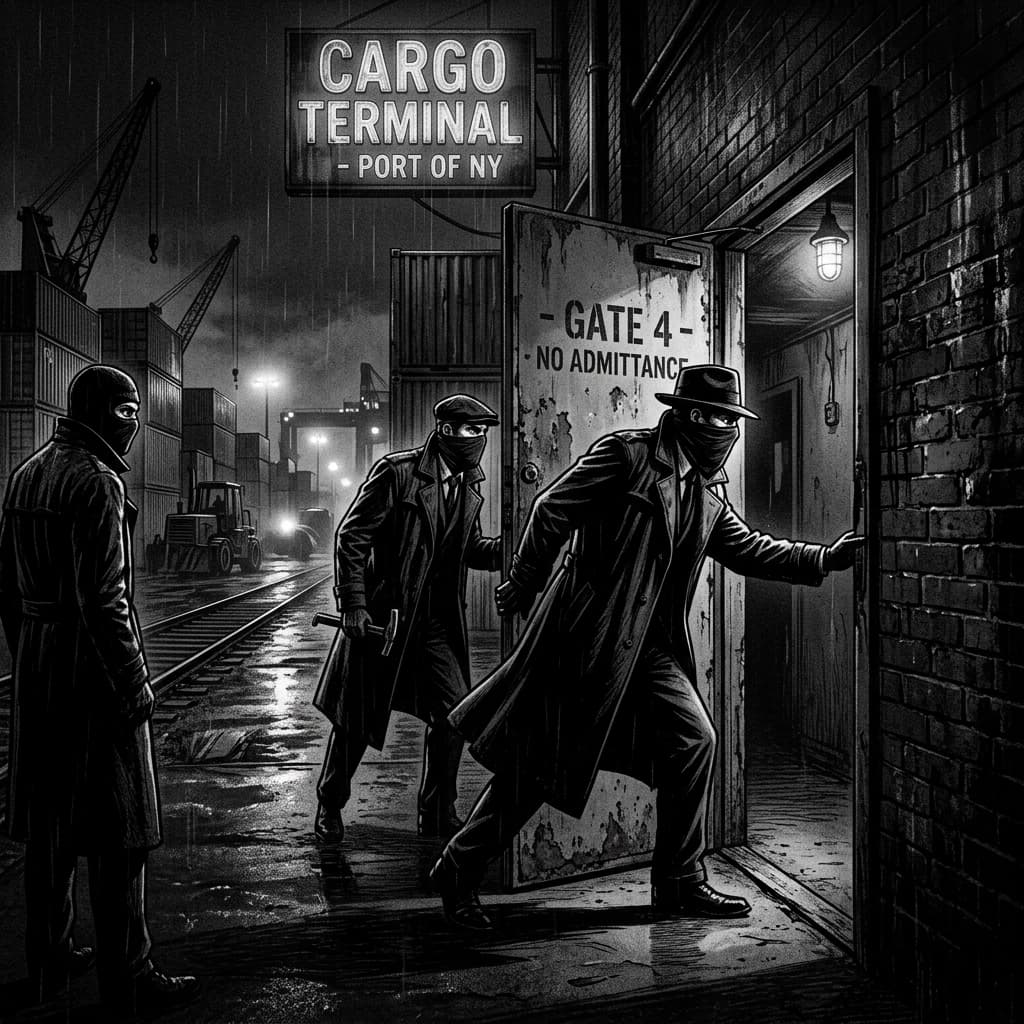
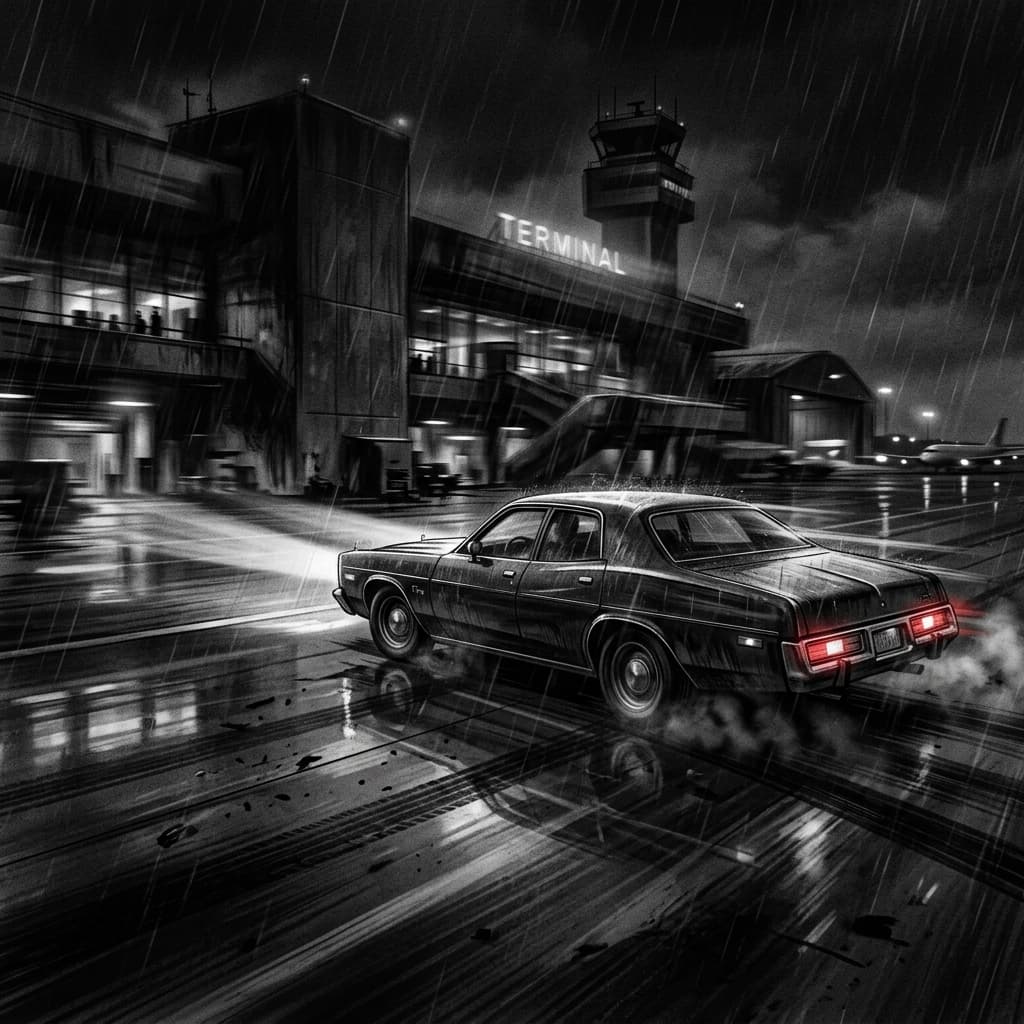
At approximately 3:00 AM on December 11, 1978, the crew entered the Lufthansa cargo terminal through a side door. Freddie Myers, with his legitimate access, unlocked the door. The crew was armed—but intended to avoid violence if possible.
Step 2: The Vault
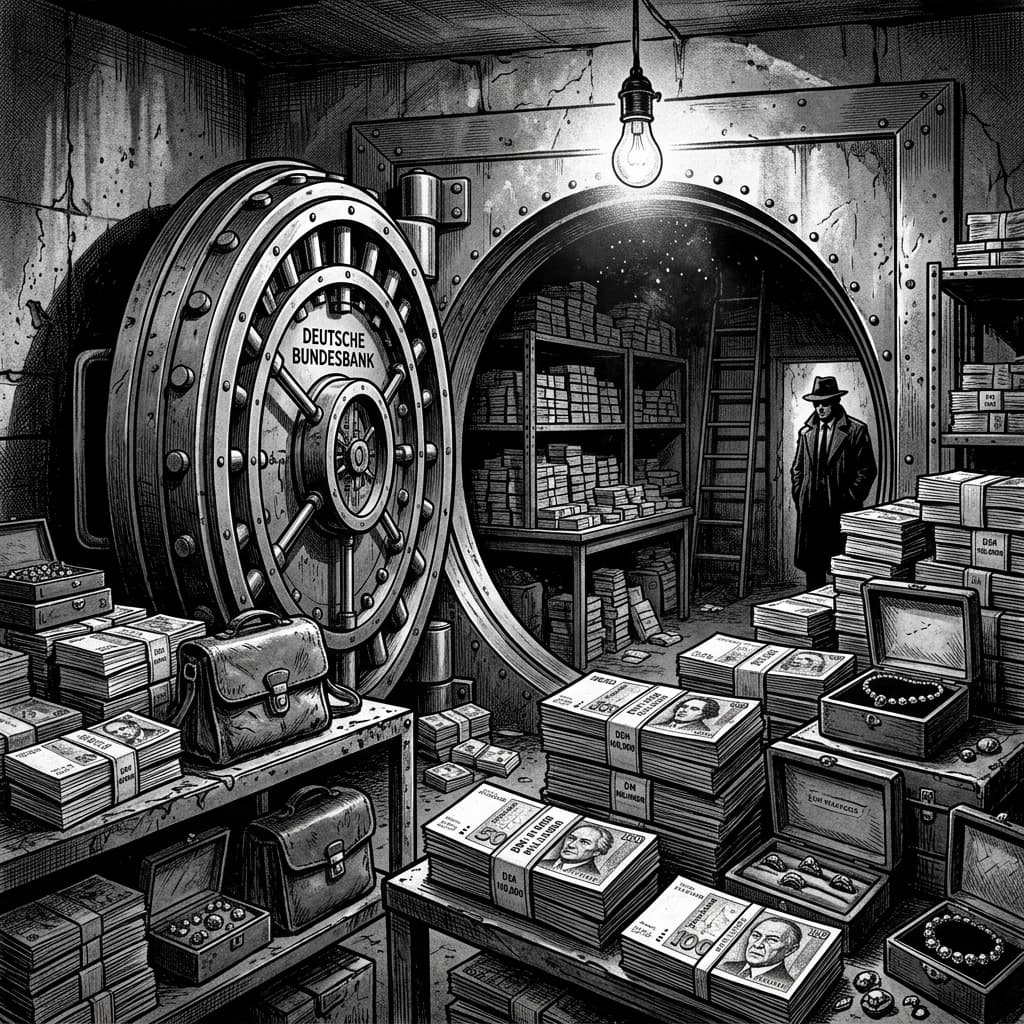
Myers led the crew directly to the vault. Using the combination provided by Myers, they opened the vault door—which contained approximately $5 million in cash (mostly Deutsche marks) and $875,000 in jewelry being held for customs clearance. The total: $5.875 million.
Step 3: The Loading
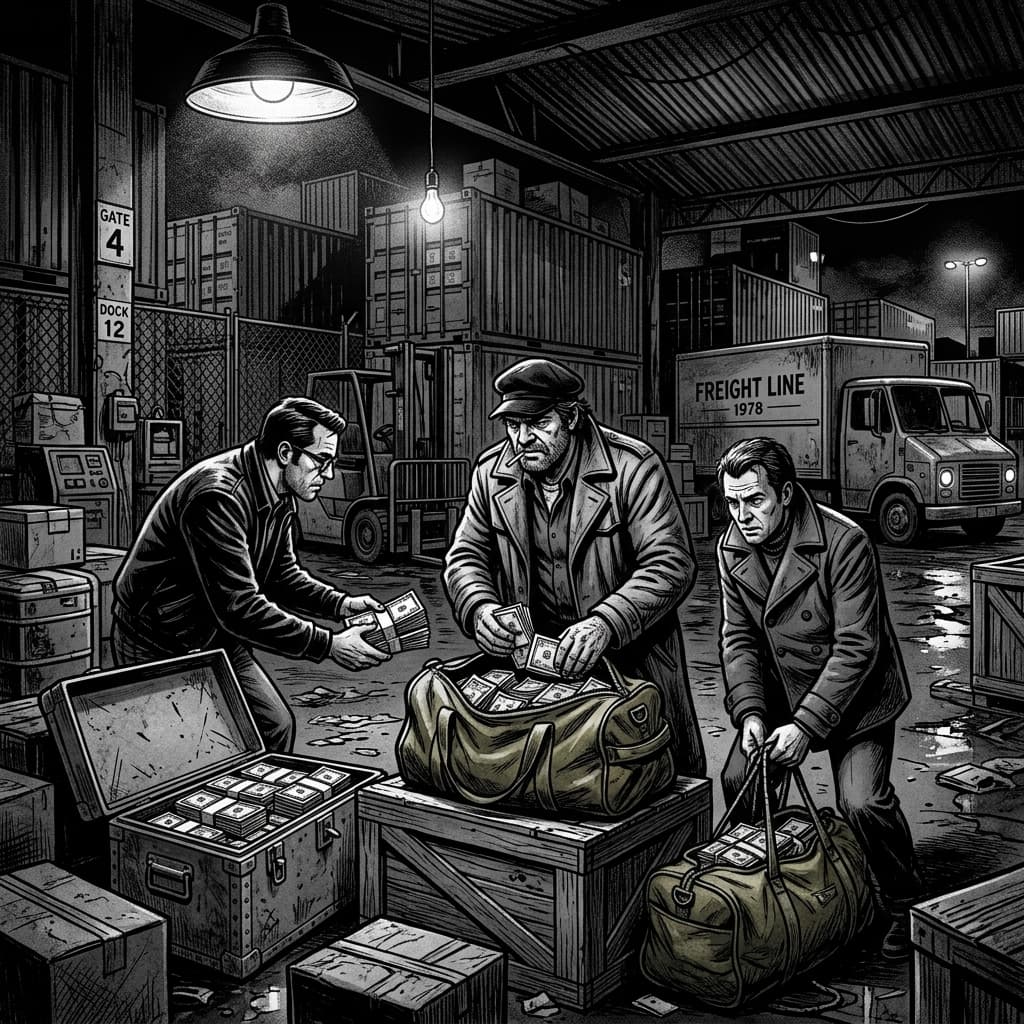
In just seven minutes—a figure that has never been definitively confirmed but is the commonly cited number—the crew loaded the cash and jewelry into duffel bags. They moved with precision, knowing that any moment could bring detection.
Step 4: The Escape
The crew exited the terminal and drove away in a waiting car. The entire operation, from entry to exit, took less than ten minutes. By the time anyone realized what had happened, the thieves were miles away.
The Heist: Seven Minutes That Shook America
At approximately 3:00 AM on December 11, 1978, six men entered the Lufthansa cargo terminal at JFK International Airport. Within seven minutes—in some accounts, as few as five—they had loaded $5.875 million in cash and jewelry into duffel bags and escaped.
The heist was seamless. No shots were fired. No alarms were triggered until hours later, when a guard finally discovered the open vault. The vault door stood open, the shelves empty. An entire terminal's worth of cash and valuables—gone.
The Immediate Aftermath
The crew divided the loot. Estimates of the exact amount vary—the $5.875 million figure is the commonly cited official total, though some sources suggest the actual take was higher.
James Burke, as the mastermind, took the largest share. Freddie Myers, the inside man, received his cut. The other crew members received smaller shares—though "smaller" in this context still meant hundreds of thousands of dollars.
For a brief moment, the crew had pulled off the perfect crime.
The Fallout: Money, Greed, and Blood
The heist was the largest cash robbery in American history. It should have made all seven men wealthy beyond their wildest dreams.
Instead, it made them targets. And the money—millions of dollars in cash with no traceable serial numbers—became a curse.
The Money Problem
The problem with stealing $5.875 million in cash is spending it. Currency in the late 1970s was not easily laundered through offshore accounts or cryptocurrency. The crew had millions of dollars in mostly unmarked bills—and no legitimate way to explain their sudden wealth.
This created a dilemma. Either they spent the money openly and attracted attention, or they sat on it and gained nothing. Many choose to spend it—and their sudden, unexplained wealth attracted the attention of law enforcement.
The Law Enforcement Attention
Within months of the heist, the FBI had identified Henry Hill as a suspect. Hill, a known associate of the Lucchese family who worked at JFK, was too obvious a connection. The FBI began surveillance.
But Hill was also a liability. The FBI knew about his connection to the heist—and they knew he could provide testimony that would convict everyone else.
The Murder Trail: Six Bodies
What happened next was a methodical elimination of everyone who knew about the heist. Within years, six of the seven men directly involved in the heist would be dead.
The First Murder: Joseph "Joe the Animal" Armitage (1979)
The first to die was Joseph Armitage. In April 1979, Armitage was shot to death in a Brooklyn apartment. The official ruling was robbery—the killer took $15,000 from the scene—but according to subsequent testimony from Henry Hill, Armitage was killed because he was talking to law enforcement.
The Second Murder: Frederick "Freddie" Myers (1985)
The second murder was Frederick Myers—the inside man without whom the heist would have been impossible. In 1985, Myers was shot to death in an Acura dealership in Yonkers, New York. The murder was never officially solved, but Henry Hill testified that James Burke had ordered the hit to silence Myers.
The Third Murder: John Locascio (1987)
John Locascio was murdered in 1987, shot in the head in a Brooklyn social club. His body was found in the driver's seat of his car—a message to anyone else who might consider talking.
The Fourth Murder: George Eraclano (1989)
George Eraclano was murdered in 1989. His body was never found—he was simply listed as missing until evidence emerged years later.
The Fifth Murder: Albert Vioni (1990)
Albert Vioni, one of the oldest members of the crew, was murdered in 1990. He was shot in the back of the head in a Manhattan restaurant.
The Sixth Murder: James Burke (1996)
James Burke, the mastermind, was finally arrested in 1996. But he would not live to face trial. In 1996, Burke died in prison at the age of 64—officially of heart failure, though some suspects foul play.
The Legacy: Unsolved Questions
The Lufthansa heist remains, in many ways, an unsolved mystery. Here are the questions that linger:
Where is the Money?
Only a fraction of the $5.875 million was ever recovered. The vast majority disappeared—spent, hidden, or laundered through some as-yet-undisclosed channel. Some estimates suggest that less than $1 million was ever recovered.
Who Ordered the Murders?
Henry Hill testified that James Burke ordered most of the murders—but Hill was a criminal and an informant, and his testimony was self-serving. Many questions remain about the chain of orders.
What About "Jimmy the Gent"?
James Burke died in prison in 1996, never publicly explaining his role in the heist or the subsequent murders. Some believe he took the secrets to his grave.
The Goodfellas Connection
The Lufthansa heist was immortalized in Martin Scorsese's 1990 film Goodfellas, which dramatized Henry Hill's life. The film depicts the heist as being pulled off without violence—though in reality, the subsequent murders were the bloodiest chapter. For another deep-dive into movie-inspired crime stories, see our Antwerp Diamond Heist story—which also inspired film and television.
The Informant: Henry Hill
The only member of the inner circle to survive was Henry Hill. In 1980, Hill was arrested on drug charges—and instead of facing a lengthy prison sentence, he chose to become a government informant.
Hill testified against James Burke and others, providing the detailed testimony that led to convictions. He entered the Witness Protection Program and lived out his life under a new identity.
In his later years, Hill gave numerous interviews and wrote a memoir—though his account of events was self-serving and often contradicted by evidence. He died in 2012, having survived the heist that had killed everyone else involved.
Conclusion
The Lufthansa heist was the largest cash robbery in American history. It was pulled off with military precision—and was followed by a wave of murders that killed everyone but one man.
What makes the Lufthansa heist compelling is not just the size of the score, but the unraveling. James Burke thought he could control the narrative. He thought he could keep everyone quiet. Instead, he created a trail of bodies that led directly to his own downfall.
The money was never fully recovered. The murders were never fully explained. And the story—told in courtrooms, in films, and in books—remains one of the great American crime stories.
References
- Lufthansa heist - Britannica - Historical overview
- How the 1978 Lufthansa Heist Led to a Trail of Dead Bodies - HISTORY - Murder trail
- Lufthansa Heist Murders: Behind the Deaths of 6 Associates - A&E - The six victims
- Lufthansa heist - Wikipedia - Full timeline
- The Great Lufthansa Heist: A Robbery That Still Defies Justice - Letter Weave - Narrative overview
- The 1978 Lufthansa Heist: Unraveling the Mystery - Weekly Recess - Investigation details
- Lufthansa Heist: The Real Story Of Goodfellas' $6 Million Robbery - All That's Interesting - Goodfellas comparison
- The Lufthansa Heist (1978): Full Story - The Irish Mob - Comprehensive story
- James Burke (criminal) - Wikipedia - James Burke biography
- Frederick Myers - Wikipedia - Freddie Myers profile
- Henry Hill - Wikipedia - Informant biography
- Lucchese crime family - Wikipedia - Mafia family context
- $500,000 in Cash Stolen in J.F.K. Raid - The New York Times (1978) - Original coverage
- Lufthansa Heist: After Nearly 40 Years, Many Questions Remain - Patch - Unsolved questions
- 47 years on: The Lufthansa heist - MSN - 47-year retrospective
- Goodfellas (1990) - IMDb - Film adaptation
- Antwerp Diamond Heist - Wikipedia - Related heist comparison
- Largest Diamond Heist - Guinness World Records - World record context