The Ghost Billion: Jan Marsalek and the Wirecard Espionage Scandal
The Ghost Billion: Jan Marsalek and the Wirecard Espionage Scandal
At its peak in 2018, the German payment processor Wirecard was hailed as the crown jewel of European technology. With a market valuation exceeding €24 billion, it had successfully displaced traditional giants like Commerzbank on the prestigious DAX 30 index. Wirecard was the proof that Europe could build a digital finance giant to rival Silicon Valley.
But on June 18, 2020, the dream dissolved. The company’s auditors, EY, refused to sign off on its accounts after discovering a gaping hole: €1.9 billion ($2.1 billion) in cash—supposedly held in trust accounts in the Philippines—likely never existed.
What initially looked like a classic corporate accounting scandal rapidly metastasized into one of the most bizarre espionage thrillers of the 21st century. At the center of the web was Wirecard’s enigmatic Chief Operating Officer, Jan Marsalek. Today, Marsalek is not just wanted for massive financial fraud; he is exposed as a high-level asset for Russian military intelligence (the GRU), having run a shadow network of spies and informants across Europe.
This article investigates the double life of Jan Marsalek, the systematic campaign to silence investigative journalists, and how a European tech giant was weaponized by a foreign intelligence agency. For another story of high-stakes financial crime, read about the Madoff Family Tragedy—the human cost behind history's largest Ponzi scheme.
Table of Contents
- The Visionary and the Ghost Rider
- Timeline of the Collapse and Espionage
- The War on the Financial Times
- The Shadow Operative: GRU Connections
- The Escape and the Aftermath
- References

The Visionary and the Ghost Rider
To understand Wirecard’s rise, one must understand the friction between its two top executives: CEO Markus Braun and COO Jan Marsalek.
Markus Braun was the face of the company. A former consultant who wore black turtlenecks and spoke in grand, abstract terms about the "cashless society," Braun presented himself as a tech visionary in the mold of Steve Jobs. He was obsessed with Wirecard’s stock price and corporate prestige, building an image of a clean, hyper-efficient fintech disrupter.
Jan Marsalek was the engine in the shadows. Lacking a university degree, the Austrian-born Marsalek was a self-taught tech prodigy who joined Wirecard in his early twenties. As COO, he was responsible for the company’s expansion into Asia and the "Third-Party Acquiring" (TPA) business—a murky network of external payment processors that supposedly handled billions of euros in transactions for high-risk industries like online gambling and adult entertainment.
While Braun focused on the public markets, Marsalek operated in a world of private jets, offshore bank accounts, and clandestine meetings. He was known to carry multiple passports, travel with suitcases of cash, and maintain close contacts with mercenary groups, diplomats, and spies.
Timeline of the Collapse and Espionage
The fall of Wirecard was not sudden. It was the culmination of years of whistleblowing, journalistic persistence, and a shadow war played out in the financial capitals of Europe. Scroll down to walk through the critical timeline.




The Rise of a Tech Titan
Markus Braun presents Wirecard as a fintech revolutionary on the global stage. Under his leadership, the company aggressive acquires third-party processors across Asia. Wirecard's stock price skyrockets, and in 2018, it joins the DAX 30 index, representing the pinnacle of German tech innovation.
The Hunted Journalist
Financial Times reporter Dan McCrum publishes the 'House of Wirecard' series, exposing suspicious transactions and fake numbers. Instead of investigating the claims, Wirecard hires private eyes to stalk McCrum in London, attempts to wiretap his office, and convinces German regulators to launch a market manipulation investigation against him.
The Novichok Dinner Party
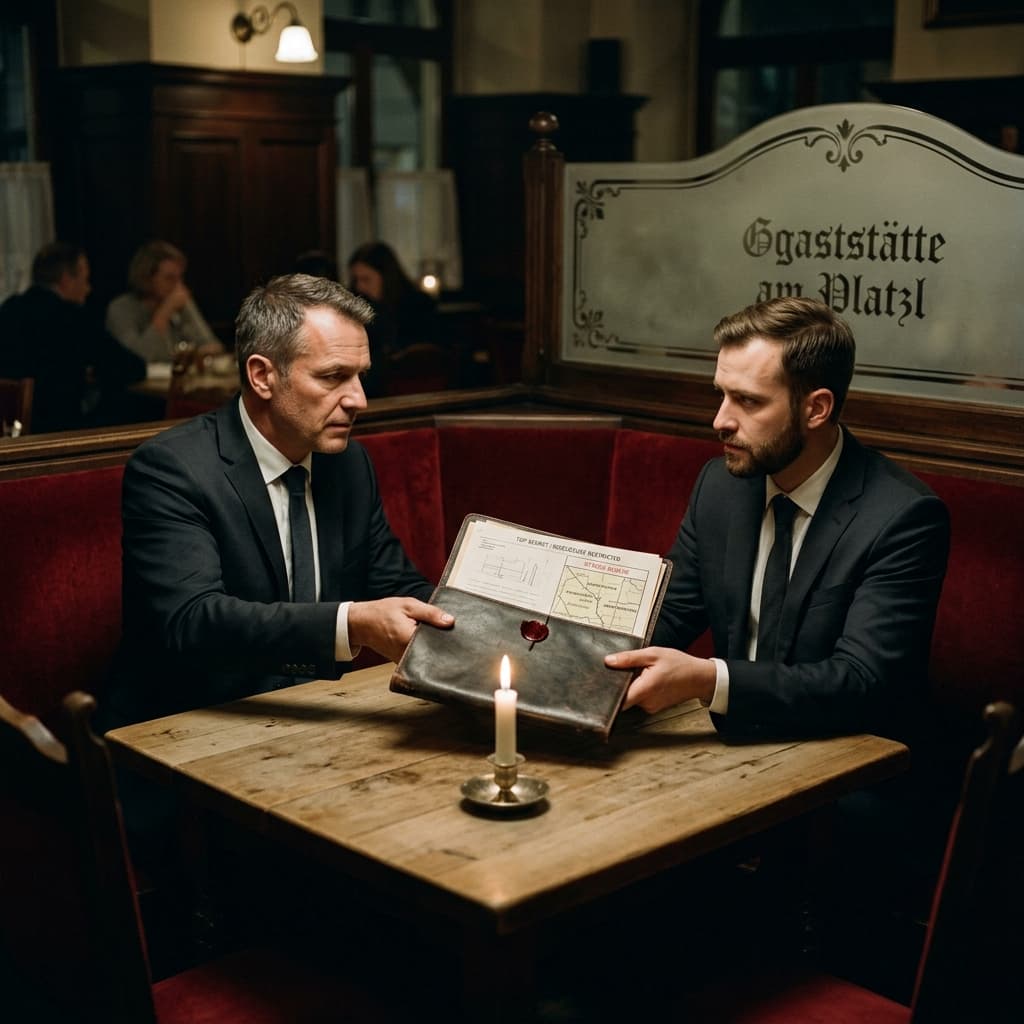
Jan Marsalek moves comfortably in European intelligence circles. At an exclusive Munich dinner, he boasts of his connections and displays four pages of top-secret documents containing the formula for the Russian nerve agent Novichok. It becomes clear he is operating as a Russian asset (GRU).
The €1.9 Billion Mirage
In June 2020, EY auditors refuse to approve the annual report, demanding proof of €1.9 billion supposedly held in Philippine escrow accounts. Investigators soon discover the certificates are forged, the trust accounts are completely empty, and the cash never existed.
The Private Jet Escape
As Wirecard files for insolvency, Marsalek tricks authorities by booking a fake flight to the Philippines. Instead, he boards a private jet to Minsk, Belarus, before fleeing to Russia under a fake identity provided by the Russian FSB, escaping a global Interpol manhunt.
The War on the Financial Times
Perhaps the most chilling aspect of the Wirecard saga was the lengths to which the company went to suppress the truth.
When Financial Times reporter Dan McCrum began publishing his investigations in 2015, exposing inconsistencies in Wirecard’s Asian operations, the company did not just issue denials; they launched a full-scale covert operation against the newspaper and the journalist.
Wirecard employed an army of former MI5 agents, private investigators, and hackers. McCrum's emails were hacked, his phone lines compromised, and surveillance teams were stationed outside the Financial Times London headquarters to photograph anyone meeting with him. Short-sellers who bet against Wirecard’s stock were targeted in the same manner.
More alarmingly, Wirecard successfully co-opted the German state. The country's financial regulator, BaFin, filed a criminal complaint against McCrum and other FT journalists, accusing them of market manipulation in collusion with short-sellers. The Munich prosecutor’s office launched an official investigation into the reporters. For over a year, the German government actively protected a multi-billion euro fraud while prosecuting the journalists who were trying to expose it.
The Shadow Operative: GRU Connections
As the financial fraud began to unravel, Marsalek’s secondary, more dangerous life came to light. Investigations conducted after the collapse by outlets like The Insider, Der Spiegel, and Bellingcat revealed that Marsalek had been recruited by Russian intelligence as early as 2014.
Marsalek used Wirecard’s vast global payment infrastructure to facilitate illicit money transfers, fund Russian mercenary outfits in Libya and Syria, and set up covert networks. He worked closely with Russian oligarchs and security officials, frequently traveling to Moscow on a diplomatic passport issued by a friendly nation.
Marsalek’s intelligence operations in Europe were extensive:
- Novichok Documents: In 2018, shortly after the Salisbury poisonings, Marsalek bragged to London financial traders about having the secret formula for the Novichok nerve agent, displaying the documents to gain influence.
- Libyan Militia Project: Marsalek attempted to recruit a private army of 15,000 mercenaries in Libya, ostensibly to "protect" cement factories, but actually to control migration flows on behalf of Russian interests.
- European Spy Ring: British prosecutors recently exposed a cell of Bulgarian nationals operating in the UK who were taking direct orders from Marsalek, surveilling Russian dissidents and tracking targets across Europe.
The Escape and the Aftermath
On June 18, 2020, Wirecard’s board suspended Marsalek. Realizing the end was near, Marsalek put a masterfully designed escape plan into action.
He booked a flight to Manila, Philippines, and paid off immigration officers to log him as having arrived in the country, creating a false digital trail for investigators. In reality, Marsalek drove to a small airfield in Bad Vöslau, Austria, where he boarded a private Cessna chartered by his Austrian intelligence contacts.
The jet flew him to Minsk, Belarus. From there, Russian security services (the FSB) escorted him to Moscow.
Today, Markus Braun and other top Wirecard executives are on trial in Munich, facing charges of fraud, market manipulation, and trust breach. But Jan Marsalek remains at large. He is believed to be living in a secure compound outside Moscow under the protection of the Russian state, utilizing a cover identity as a priest named "Father Vadim."
Wirecard's collapse is no longer studied just as a failure of auditing or financial regulation; it is remembered as a warning of how modern financial technology can be hijacked by intelligence agencies to fund shadow wars and subvert democratic states.
References
- How Wirecard Conned the World - Financial Times - Dan McCrum's first-hand account of exposing the fraud.
- The Marsalek File: From Wirecard to the GRU - Bellingcat - Forensic investigation into Marsalek's flight and intelligence connections.
- The Spy Who Bought the DAX - Der Spiegel - In-depth piece on the German political failure and regulatory capture.
- Lords of Scam: The Wirecard Dossier - Netflix Documentary - Narrative detailing the rise and fall of the executives.
- UK Prosecutions of the Marsalek Spy Ring - Crown Prosecution Service - Explaining the Bulgarian espionage cell run by Jan Marsalek in London.